
A Reflection on the readings for the Thirteenth Sunday in Ordinary Time, June 30th, 2024
Reading 1: Wis 1:13-15; 2:23-24
Responsorial Psalm: Ps 30:2, 4, 5-6, 11, 12, 13
Reading 2: 2 Cor 8:7, 9, 13-15
Gospel: Mk 5:21-43 or 5:21-24, 35b-43
The Book of Wisdom comes late in the Old Testament tradition. It was written in Greek by an unknown Jewish author in Alexandria, Egypt probably about 100 years before the time of Christ. As it was authored in Greek and written outside the Holy Land very late in the Jewish tradition, this book is not accepted in the Hebrew canon.
The primary purpose of the Book of Wisdom is the glorification of the splendor and worth of divine wisdom. It teaches that the virtue of justice is the application of wisdom to moral conduct. Therefore, moral discipline is understood as synonymous with wisdom, and moral discipline is rewarded by God’s mercy.
Our first reading teaches that God created all things GOOD. God intended for all of creation to be wholesome, and to thrive in justice. God did not create death and does not want any of creation to die. Death is not a punishment for sin; death is a cure for sin. The one who dies can sin no more and if his / her moral discipline in life warrants it, God’s mercy will be the reward. Death entered creation through sin; through “the envy of the devil” and those who lack the moral discipline to resist the devil will experience, not only the death that comes at the end of life on earth but the eternal death of eternal separation from God. As God is love, eternal death is eternal separation from love; no one to love you, and no one for you to love. That is HELL.
Our Responsorial Psalm also reflects God’s mercy: “I will praise you, Lord, for you have rescued me.”
In our second reading, St. Paul is looking for money to distribute among the poor but, it is also a reflection on the theme of justice and moral discipline. Out of justice, those who have an abundance of resources should recognize their responsibility to share that abundance with those who are less fortunate. When Jesus was asked; “what is the greatest commandment in the law,” he responded that the greatest commandment is to love God; and “The second is like it: you shall love your neighbor as yourself” (Mt 22:39). Therefore, moral discipline demands that we care for those in need.
Our gospel passage is from chapter 5 of Mark and there is a shorter version of this passage that may be proclaimed at Mass. As we are told in our first reading, God does not desire death but, rather, desires faith and obedience on the part of his creation. Jairus had faith in God and begged Jesus to heal his daughter who was at the point of death. Jesus showed God’s love for the life of his creation by restoring the daughter of Jairus to life and he did so by taking: “the child by the hand.” This is not to be considered a resurrection experience as the little girl would eventually die again and would hopefully die in the grace of God and be rewarded accordingly. The same can be said of Jesus restoring Lazarus to life because Lazarus was “a friend of Jesus.” God loves his creation and does not desire death, and we are reminded of that by these accounts of Lazarus and the daughter of Jairus. Similarly, we are told about the cure of the woman who had suffered for twelve years with a hemorrhage. She had faith in God and because of that faith, she was told: “Daughter, your faith has saved you. Go in peace and be cured of your affliction.”
But I think we can also see these miracles as Eucharistic. Both of the miracles recounted in our gospel this week required faith, but both also required the recipient of the miracle to touch “The Body of Christ.” Jesus took the child “by the hand,” and the woman with the hemorrhage “touched his cloak.” Those who have faith and exhibit that faith through justice and moral discipline genuinely believe that the Eucharist is the Body, Blood, Soul and Divinity of Christ, and truly believe that the Eucharist can and will do miraculous things in us and for us. The Golden Thread this week is that God wants us to be cured of our failings in justice and moral discipline. That requires confession of our failings and faith that God will forgive those failings if we truly attempt to amend our ways. It also requires faith that the Eucharist, and the grace of God that comes to us through the Eucharist, will give us the strength to make those amendments.
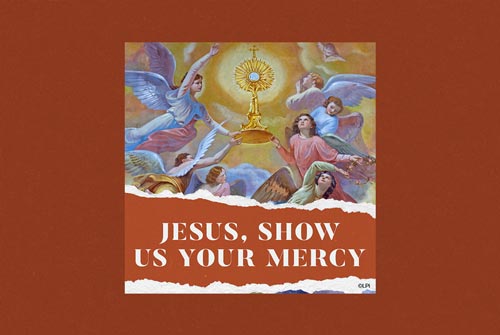
Reference: Illustration ©LPi