Twenty-second Sunday in Ordinary Time
Reading 1: Jer 20:7-9
Responsorial Psalm: Ps 63:2, 3-4, 5-6, 8-9
Reading 2: Rom 12:1-2
Gospel: Mt 16:21-27
Jeremiah’s prophetic mission began in 628 B.C. and therefore occurred about 100 years after that of Isaiah in 742. Whereas Isaiah witnessed the fall of the northern Kingdom of Israel to the Assyrians in 722 B.C., Jeremiah witnessed the fall of the southern Kingdom of Judah to the Babylonians in 587 B.C. The message of both portray a nation in crisis and their message, along with that of all the other pre-exilic prophets, was that the crisis could be averted if the people and their leaders would turn from their sinfulness and return to, and trust in, God as their protector, rather than to rely on their own strength or on alliances with other nations.
It is important for us to understand that the prophets of Israel (in Hebrew, the Nevi’im), more than most people of their times, could sense the majesty of God from the created world, but they were scandalized by human conduct, as we should be today. The sinful behaviors that horrified the prophets we regard as typical ingredients of modern society. Cheating, lying, adultery, exploitation of the poor and injustice are simply expected in the modern world; but these had disastrous consequences in the minds of the prophets; they were a threat to the continuation of civilization. We rarely grow indignant over hypocrisy, falsehood, and injustice; but to the prophets these were the doom of humanity.
The words of a prophet were soul wrenching; to the prophet and to those who heard him. “Whenever I speak, I must cry out, violence and outrage is my message; the word of the Lord has brought me derision and reproach all the day.” The words of a prophet were his reaction to the indifference to evil he saw in the society to which he belonged. It was unbearable to the prophet that man should be indifferent to sinfulness and injustice. The prophet saw the indifference of man to sin as a catastrophe, a threat to his continued existence. Therefore, it was not only man’s sin that brought condemnation from the prophets, it was also man’s indifference to that sin.
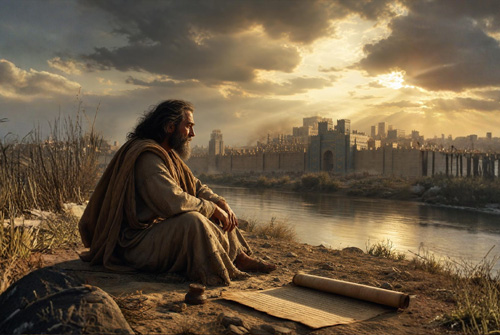
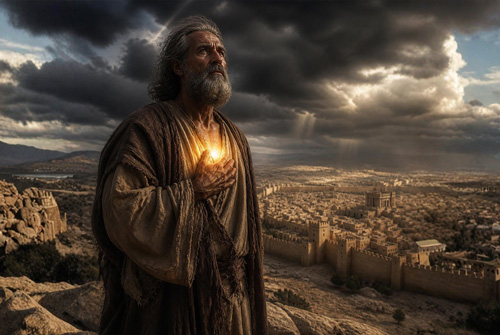
Jeremiah is a perfect example for us of the pre-exilic prophets because we can sense his passion and we can see the suffering he endured at the hands of his contemporaries because of that passion. Our first reading this week gives us an insight into the interior crisis Jeremiah experienced because of that passion and suffering. In the verses just prior to our reading, we would see that Jeremiah had just been scourged and placed in the stocks over night because of his prophesying. He is obviously at a low point emotionally in our reading when he says that God tricked him into prophesying and essentially tells God: “I quit; I’ve had enough of this persecution.” But also notice that God’s call to Jeremiah was stronger than Jeremiah’s will when he says that the call of God becomes “like a fire burning in my heart,” and he cannot hold it in; he must continue to prophesy. Notice that for a short period of time in our reading we can almost hear God saying to Jeremiah, as Jesus does to the apostles in our gospel: “You are thinking not as God does, but as human beings do.” “Whoever wishes to come after me must deny himself, take up his cross, and follow me.” Jeremiah suffered for following God’s call; but he was never promised that it would be easy. The message is the same for us: being a Catholic Christian is not easy; but then it’s not supposed to be. Catholicism is not something that has been tried and found lacking; it is something that has been found difficult and therefore left untried (see G. K. Chesterton: “Orthodoxy”). When you read the books of the prophets, try to recognize how in tuned they were with the mind of God and how horrified they were with humanity’s reaction to the prophetic message.
Our second reading from Romans carries on the theme that we would find in any of the pre-exilic prophets: “Do not conform yourselves to this age …. discern what is the will of God.” As we know, it is through our bodies and our senses that we experience the created world and can, therefore, allow ourselves to be conformed to this age. But St. Paul urges us to “be transformed by the renewal of your mind.” Transformation proceeds from the inner moral core of a person and is brought about by the Holy Spirit which gives us the discernment to determine what is the will of God. Paul exhorts his readers to look beyond the created world and to give spiritual worship to the creator.
Our gospel this week follows directly on last week’s gospel wherein Peter confessed Jesus to be the Messiah and Jesus responded that He would found his church on the faith of Peter. You can imagine that Peter’s chest was a little puffed up at this point and decides to take matters into his own hands to prevent Jesus’ passion. But then he, and we, are reminded that our minds and wills are not always in conformity with God’s. “Get behind me Satan! You are an obstacle to me” is not a rebuke of Peter; it is a rebuke of Satan who attempted to use Peter to dissuade Jesus from his mission.
If we search our hearts, we will find God’s will, and then we have to make the conscious decision to follow that will, even if it means persecution or rejection by others. Are we willing to pick up the cross and follow God’s will? That is probably the “golden thread” this week: Jeremiah had a rough time following God’s call, and so did the apostles. And there is always the possibility we may experience some of what they experienced. Are we willing to do so?