Solemnity of All Saints
Reading 1: RV 7:2-4, 9-14
Reading 2: 1 JN 3:1-3
Gospel: MT 5:1-12A
This week we celebrate the Solemnity of All Saints, to celebrate those Saints whom we know by name because the church has declared them Saints, and those whom we do not know by name because sanctity is within the reach of each of us and does not require that we shed our blood for the faith. Many whom we do not know by name have reached that state of existence we call “heaven” because of the lives they led on earth and because they served as examples to others to do the same. This is the “Communion of Saints” we refer to in our creed; all those who have gone before us in sanctity and now pray for us before God to join them in the perfect life with the Most Holy Trinity, with the Blessed Virgin Mary, and with all the angels (see CCC 1024).
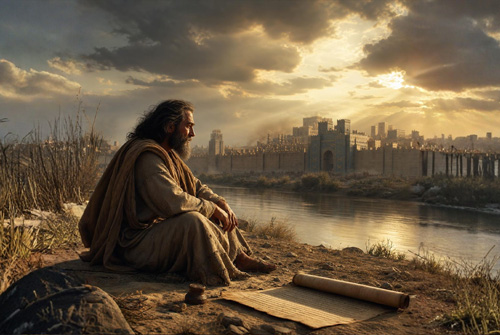
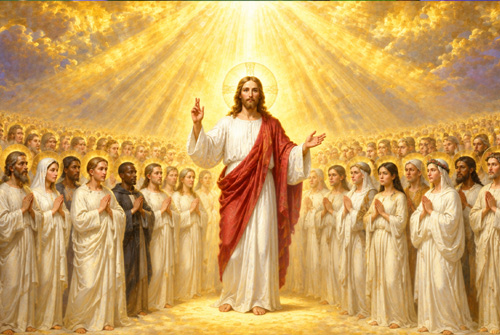
The Book of Revelation, from which our first reading is taken, is exceedingly difficult to understand because it is not understood literally but symbolically. It abounds with unfamiliar language and symbolism which makes it difficult for us to comprehend. As we do not take this book literally, we should look for the hidden meaning in the symbolism of the words we read. Our first reading tells us that, in his vision, John saw a “great multitude, which no one could count, from every nation, race, people, and tongue.” The multitude stood before the throne of God wearing white robes that had been washed in “The Blood of the Lamb.” This multitude represents those whom we do not know by name but who, through sanctity of life and through the Sacraments of the Church, have been absolved of past sins and are now experiencing eternal happiness in heaven and are praying for us to join them.
The saints did not live sinless lives; that is beyond our human capacity. But they confessed their sins and begged for forgiveness and, doing penance and making a firm purpose of amendment to change their sinful habits, have washed their robes in “The Blood of the Lamb” and now find themselves in the blessed “Communion of Saints.” Although the language used to express this truth is difficult to comprehend, if we look for the truth behind the words, we should be inspired to follow their example so that we, too, may be found worthy of joining them.
Our Responsorial Psalm should also inspire us to join them as, we are not there yet and have much work to do to get there. We are those referred to in: “Lord, this is the people that longs to see your face.” And our second reading from The First Letter of John should also instill that longing in us as it reminds us that, through baptism, “we are God’s children now,” but that state of existence we call heaven “has not yet been revealed” to us. But if we hope for that existence and do all in our power to deserve it and long to see God’s face, then we shall reach our goal and “we shall be like him, for we shall see him as he is.”
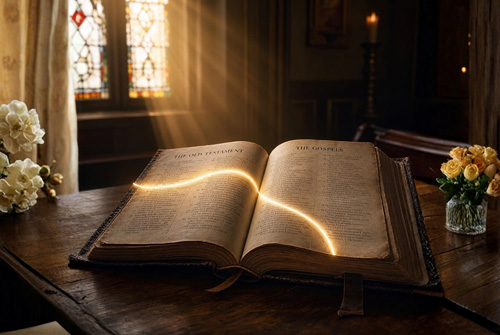
Our gospel passage from chapter 5 of The Gospel of Matthew is from “The Sermon on the Mount” and, specifically, from “The Beatitudes.” If we truly long to join that “Communion of Saints,” the Beatitudes are a roadmap on how to get there. Unlike the Book of Revelation which requires us to search out the meaning behind the symbolic language, the Beatitudes are straight-forward and require no explanation.
Throughout the gospels, we receive the teaching we need to reach sanctity and the Beatitudes are another example of that teaching. The “Golden Thread” of our readings this week is the holiness of those who have gone before us, who pray for us to join them, and who serve as inspiration for us to constantly reform our lives so as to be worthy of heaven. As Catholics, we do not worship the saints as some may accuse us of doing, we admire them for the lives they led and we pray to them, asking for their prayers and their inspiration.