Thirty-Second Sunday in Ordinary Time
Reading 1: Wis 6:12-16
Reading 2: 1 Thes 4:13-18
Gospel: Mt 25:1-13
The Book of Wisdom is one of those seven books rejected in the Hebrew Canon (and in the Protestant tradition) because it was written about 125 B.C., considered too late in the Hebrew tradition; and was originally written in Greek and probably composed in Alexandria, Egypt. To be accepted in the Hebrew Canon it must have been written before the time of Ezra (approximately 450 B.C.) and must have been written in Hebrew and composed in the Holy Land. So, the Book of Wisdom fails on three of the Hebrew criteria.
By the 2nd century B.C., many Jews had migrated into the surrounding nations and were heavily influenced by Greek culture and language, because those lands were conquered by Alexander the Great and his successors and Greek culture was imposed on the people of those lands. The purpose of the author of Wisdom (and we don’t know who he is) seems to be to motivate those dispersed Jews to abandon Greek culture and maintain their ancestral culture by abiding by Mosaic Law and their covenantal relationship with God.
In the first section of the book the author extols the rewards of justice – that the just are in the hands of God and will be rewarded for their fidelity in the end even though they are presently suffering in this life; and the unjust will receive punishment in the end commensurate with their sins.
The second section of the book acclaims the glories of wisdom and it is from this section that the book receives its name. Specifically, this section is called “The Wisdom of Solomon” which caused many ancients to believe the author was the wise King Solomon himself. Such is not the case, but the author put his words in the mouth of Solomon to give them more authority. Our first reading this week comes from this section.
The author reiterates a passage from Genesis that man is made in the image of God and is made to be imperishable (Wis 2:23), but he also makes the point that man’s immortality is dependent upon union with wisdom (Wis 8:13 & 17). Therefore, if one longs for immortality, he must acquire wisdom; and wisdom is from God. Therefore, immortality is dependent upon union with God. And the wisdom necessary for union with God is readily available as our first reading tells us: “She is readily perceived by those who love her and found by those who seek her.”
So, the message of our first reading is that those addressed in this book (the ancient Jews and we in the modern world) are to stand in awe of the wisdom of God. Wisdom so great that God created all things out of nothing, and that all created things work in union with all the remainder of creation for the common good. That, alone, should make us marvel at the wisdom of God! Then seek God’s wisdom, which is readily available to us through the scriptures and the 2000-year-old teachings of the church. To do so is the beginning of immortality. But immortality is attained only after our earthly life is ended, so the golden thread that will connect with our gospel is: Prepare yourself in this life for union with God by seeking God’s wisdom and following His commands, because when this life is ended, there will be no further chance for immortality.
Our Responsorial Psalm carries on this theme of seeking immortality through God’s wisdom with: “My soul is thirsting for you, O Lord my God.”
And in our 2nd reading from 1st Thessalonians, St. Paul continues the theme of immortality when, on the last day, those who are in union with God will be caught up into the clouds (into heaven) where we will be re-united with those who have gone before us in faith. But, the “Last Day” will be the last day of our earthy life, and those who have sought the wisdom of God and are in union with God will reach immortality. But we are to prepare for that “Last Day” because we never know when it will come, and we are to do so by seeking to unite ourselves with God through wisdom. We are to recognize the wisdom of God in all of creation and to seek out that wisdom in the scriptures and the teachings of the church. In other words, we must prepare ourselves for the end of our earthly life because, with our death, comes judgement, and our last chance for immortality.
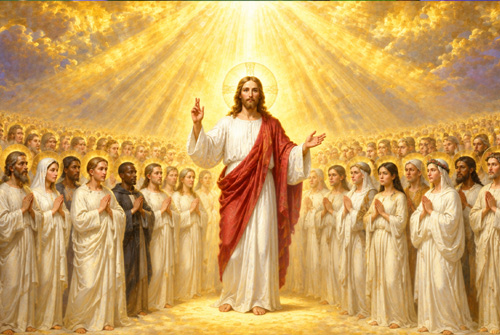
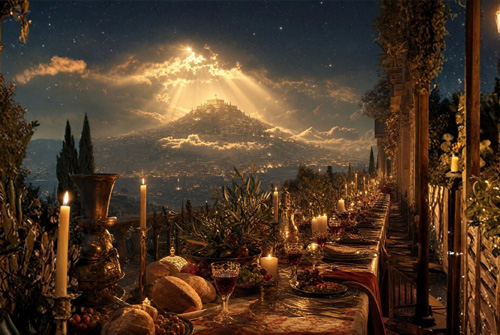
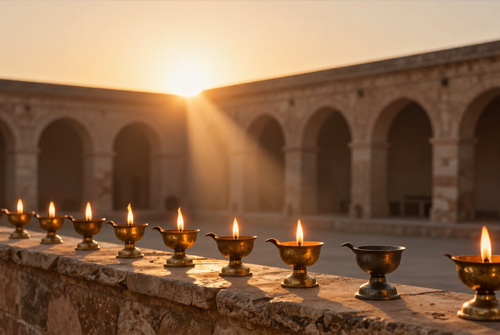
In our gospel passage from Matthew 25, Jesus, again, teaches in a parable. In this parable, the wedding feast is to be equated with heaven – in other words, immortality. And we have wise virgins and unwise virgins. The unwise virgins did not prepare themselves properly for the wedding feast and, because they were un-wise, they were not admitted to the feast. But the wise, who were properly prepared, were admitted and enjoyed the heavenly banquet of immortality.
The message of our readings this week (and the golden thread) is simply: “Be Prepared.” The church has always encouraged us to be prepared for the hour of our death, because we know not when it will come. In the Rosary, we pray to the Blessed Mother to “pray for us sinners now and at the hour of our death.” Ideally, we should live as if this may be our last day among the living. If we were truly prepared for that moment like many of the saints, we would not fear death because we know it is the moment of our union with God. Unfortunately, we are all human and no matter how hard we have tried to follow God’s law and the teachings of the church, we all feel trepidation as to whether we have actually done so. But, if we can keep our consciences clear by doing our best to avoid sin and by partaking of the sacraments of the church, we will prepare ourselves for that moment of our union with God.
Pray that God will penetrate our hearts with the Holy Spirit to cause us to search out the wisdom of God and to follow where it leads us so that we will “Be Prepared.”