Eighteenth Sunday In Ordinary Time
Reading 1: IS 55:1-3
Responsorial Psalm: PS 145:8-9, 15-16, 17-18
Reading 2: ROM 8:35, 37-39
Gospel: MT 14:13-21
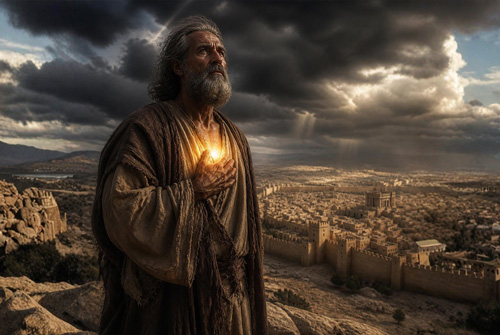
Our first reading from chapter 55 of the Book of Isaiah is entitled “An Invitation to Grace,” and the message of the invitation is that God desires to freely give to all who will accept the invitation. The passage begins with: “Thus says the Lord: All you who are thirsty….” Not just the Jews but ALL people. The grace that is offered in this invitation is available to ALL who will accept the invitation.
On the surface we see the gift of grace as nourishment, as those who are thirsty should come and drink water; those who are hungry should come and receive grain and wine and milk, and they should receive this food and drink without paying. As always, we look beyond the words on the printed page to find the meaning in much of scripture and, in doing so, we will see this passage as sacramental. Those who are thirsty should come to the waters of baptism; those who are hungry should come to the food and drink of the Eucharistic. And with those who accept these superabundant gifts, God will renew “the everlasting covenant, the benefits assured to David.” What was assured to David was that his heir would sit upon his throne and rule in God’s kingdom forever; and the benefits of that kingdom are eternal life.
The passage may speak in terms of food and drink, but the gift that is offered is the gift of salvation offered to all through the sacraments of the church, particularly the Eucharistic. The gift of God’s grace and the gift of the Eucharist are superabundant, there is no limit, and these gifts are available to all who will choose to accept that which God offers.
Notice how our Responsorial Psalm carries on the theme of nourishment: “The hand of the Lord feeds us; he answers all our needs.”
In our second reading, St. Paul reminds us that, if we have, with pure and contrite hearts, accepted God’s gift of grace through the sacraments and the teachings of the church, then we are found without serious sin and cannot be separated from the love of God. No power on earth can separate us from the love of God if God, the judge himself, as acquitted us through the Sacraments of Reconciliation and Eucharist; unless we choose to be separated through serious, unrepented sin.
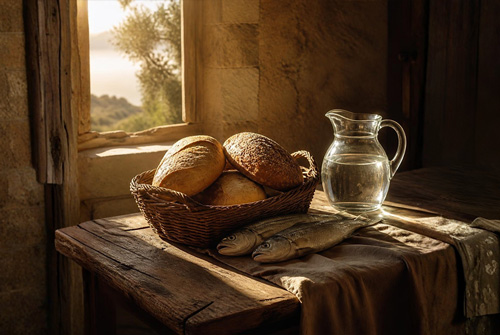
Our gospel this week is Matthew’s account of the miracle of the loaves and fishes and is the only miracle of Jesus that is recounted in all four gospels. Once again, we have a superabundance; five loaves and two fish to feed 5000 men, not counting the women and children. Jesus withdrew to a “deserted place,” but the crowds followed him. As this is a deserted place, it is reminiscent of the desert experience of the Exodus from Egypt to the Promised Land when God took pity on the people and fed them with a superabundance of manna in the desert. Here, Jesus took pity on the people and cured their sick and is about to feed them.
When it was evening, the disciples wanted Jesus to send the people away so they could find food for themselves. Jesus responded: “There is no need for them to go away; give them some food yourselves.” These disciples will eventually become apostles and, as such, will be the first bishops of the church. It will be the responsibility of the bishops and the priests they ordain to feed the people. And when Jesus said the blessing and broke the loaves it was the disciples who distributed the bread and the fish to the crowds; foreshadowing the priesthood that Jesus would establish through those disciples and charging that priesthood to “Feed My People.” And when everyone had eaten, there were twelve wicker baskets full of fragments left over: SUPERABUNDANCE.
The golden thread this week is God’s superabundant love for us which he manifests in the sacraments of the church. Through those sacraments we participate in the holy mysteries of Christ and progress spiritually toward our union with the Holy Trinity.