A Reflection on the Readings for the Fifth Sunday of Easter, April 28, 2024
Reading 1: Acts 9:26-31
Responsorial Psalm: Ps 22:26-27, 28, 30, 31-32
Reading 2: 1 Jn 3:18-24
Alleluia: Jn 15:4a, 5b
Gospel:Jn 15:1-8
Chapter 9 of St. Luke’s “The Acts of the Apostles” tells us about the conversion of St. Paul, which continues the overall theme of “Acts” concerning the development of the church in the first century. Luke presents the early church to us as the bearer of the word of salvation, always guided by the Holy Spirit. It is interesting to note the early church was known as “The Way,” a designation the early community gave itself.
At this point in the narrative, Paul is still known by his Hebrew name, Saul; it is not until 13:9 that he is referred to by his Greek name, Paul. With his conversion, Saul / Paul turns from being an outspoken opponent and persecutor of the church to an outspoken proponent and defender of the church. So, the persecutor becomes an apostle and joins the community he once persecuted and debates against the Hellenists (Greek-speaking Jews), those who originally joined him in the persecution and who tried to kill him because of his conversion. Paul’s refusal to impose Mosaic Law upon his Gentile converts was the source of friction between himself and the Jewish Christians of Jerusalem.
Saul’s conversion from persecutor to apostle to the Gentiles clearly indicates that God was acting in the early church through the Holy Spirit. Saul’s conversion is seen as the call of a prophet. His conversion was initiated by a blinding light from heaven and the voice of Jesus calling to him (9:3-5). Such an experience is referred to as a “theophany,” a very profound experience of the presence of God. Compare Saul’s experience in chapter 9 to the call of Isaiah in chapter 6 of Isaiah or the call of Moses in chapter 3 of Exodus. Once again, I draw your attention to the power of the Holy Spirit that made Saul’s conversion possible.
We are also told in our first reading that because of the cessation of Paul’s persecution of The Way, the church was at peace and grew in numbers “with the consolation of the Holy Spirit.”
Our Responsorial Psalm also carries on the theme of the development of the church with: “I will praise you, Lord, in the assembly of your people.”
Our second reading from the 1st Letter of St. John is often referred to as a love letter because of the emphasis placed on Christian love – love for one’s neighbor and the love God has for his people. The entire message of 1st John can be summed up as: believe in Christ, follow his commandments, and love your neighbor. Doing so assures us that we abide in God and God in us; that assurance comes “from the Spirit that he gave us.”
St. John also reminds us that we are to love in deed and in truth. In other words, we are not to simply espouse our faith. We are to live it through our deeds of Christian charity. But we are also to believe in our faith as the TRUTH. And that truth is what Christ taught the apostles and handed on to us through the scriptures and teachings of the church throughout the church’s history. That truth is unequivocal; it is not true at some times and fails to be true at others.
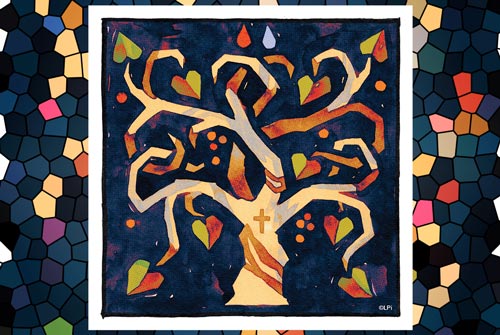
Our gospel passage is from chapter 15 of the Gospel of John, entitled: “The Vine and the Branches.” The Old Testament often depicts Israel as a vine planted and preserved by God (see Psalm 80). Here, Jesus refers to himself as the vine and the apostles as the branches. As Christians, we assume the mantel of apostleship and the responsibility to “bear much fruit.” That is, of course, not possible if we do not remain on the vine, firmly rooted in the teachings of Christ passed on to us through the teachings and sacraments of the church and nourished by the Holy Spirit. By remaining on the vine and, therefore, by remaining in the truth of the gospel, we will be pruned (enlightened) by the Holy Spirit to bear more and more fruit. The fruits of the Holy Spirit are: “love, joy, peace, patience, kindness, generosity, faithfulness, gentleness, and self-control” (Gal 5:22-23). Failing to bear these fruits means we will be cut off from the vine and burned in the fire.
Jesus promised to send the Advocate, the Holy Spirit, upon his church in his name and that the Spirit would teach the church everything and lead the church to all truth (Jn 14:15 ff). That is the assurance we have in the truth of Christ’s teaching and the assurance that the truth is passed on to us faithfully by the Holy Spirit through the church.
Graphic: LPi