Twenty-seventh Sunday in Ordinary Time
Reading 1: Hab 1:2-3; 2:2-4
Responsorial Psalm: Ps 95:1-2, 6-7, 8-9
Reading 2: 2 Tm 1:6-8, 13-14
Gospel: Lk 17:5-10
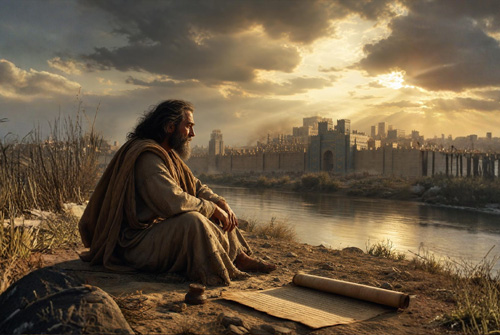
Habakkuk was a prophet of the southern kingdom of Judah long after the northern Kingdom of Israel was destroyed by the Assyrians in 722 B.C. and just before Judah was overrun by the Babylonians in 597 B.C. Habakkuk is dated between 605 and 597 B.C. The Book of Habakkuk is very short, only three chapters in length, but it is a rich prophecy concerning the impending doom of Judah at the hands of the Babylonians. Unfortunately, we are getting only a very small portion of that prophecy in this reading.
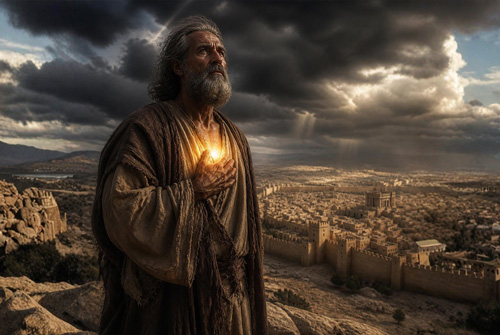
The first two chapters of Habakkuk are presented to us as a dialogue between Habakkuk and God where Habakkuk seems to be questioning God’s providence in the world. Judah was rife with violence, idolatry and political intrigue at the time and Habakkuk accused God of failing to intervene. In this short reading God’s response to Habakkuk is that Habakkuk is to write down the vision that he is about to receive. But we aren’t given the vision in this reading and we won’t know it unless we read on in chapter 1 where God declares that he is raising up Chaldea (Babylon), “that bitter and unruly people,” “who makes his own strength his god,” and Babylon will be God’s instrument to bring judgment on Judah. Again, Habakkuk questioned God for using the vicious Chaldeans (Babylonians) to bring judgment on Judah, but God’s answer, and the golden thread of this week’s readings, is in the last line of our reading from Habakkuk: “the just one, because of his faith, shall live.” This is God’s assurance that the just; those who have faith in God and his judgments and have the patience to await those judgments, will survive the calamity that is about to be visited on Judah. Faith in God’s providence and the patience to await the fulfillment of God’s plan is the lesson for us in this short first reading.
Our second reading from 2 Timothy also touches on the theme of faith but also on the theme of duty to God. And in addition, it informs us that Paul imposed his hands on Timothy, which we may interpret as an ordination, making Timothy the administrator (i.e., bishop) of the Ephesian community. As a bishop, Timothy had an obligation to God to perform the duties he had been given by God and to perform them faithfully. As disciples of Christ, we also have the obligation to perform the duties of a disciple with faith and with trust in God’s providence; and we are to perform those duties without regard to earthly reward. The reward will come when God’s providence has been revealed in history. But Paul also reminds Timothy to not be ashamed of his Christian faith because Paul was, at this time, imprisoned for the faith. This should also remind us not to be ashamed of our Catholic faith when we are in the presence of others who don’t share our faith. Are we ever ashamed or reluctant to draw attention to ourselves by making the Sign of the Cross in a restaurant when we are surrounded by others? Paul also reminds Timothy to guard that faith with the power of the Holy Spirit, through which that faith, and the will to carry out our obligations to God, is given to us.
Our gospel reading carries on the dual theme of faith and duty with Jesus reminding us of how much we COULD do if we had faith the size of a mustard seed. And, as we know, that Christian faith makes us servants of God, not equals of God. As servants, we are expected to live out our Christian values in God’s service. We will be allowed to “eat and drink” at the heavenly banquet when; we have done what we are obliged to do. In carrying out our obligations we are simply “unprofitable servants” who have carried out God’s will without regard to earthly reward.
Another theme that we should see in our readings this week is that of relationship. In our first reading, Habakkuk was in an intimate relationship with God; even to the point of conversing with God and hearing God’s answer to his complaints. In our second reading, Timothy was in a relationship with Paul who was the instrument of his ordination to his sacred office. But as it is a sacred office, he was in relationship with God who chose him for that office. In our gospel passage, the servant (who represents all of us) was in a relationship with the master and that relationship involved faith in the master’s authority and the obligation to carry out the master’s will without regard to earthly reward. The reward will come when the master’s will has been carried to completion.