A Reflection on the Reading for Sunday, December 10, 2023
Reading 1: Is 40:1-5, 9-11
Responsorial Psalm: Ps 85:9-10-11-12, 13-14
Reading 2: 2 Pt 3:8-14
Gospel: Mk 1:1-8
The Season of Advent is a season of preparation. It is preparation not only for the celebration of Christ’s first coming into the world at Christmas when we offer praise and thanksgiving to God for the love and mercy he has shown us by coming into the world in the person of Christ and, through His ministry, to show us how to live lives of virtue, that we might be co-heirs with Him in the kingdom of heaven. But, more importantly, it is a time of preparation for His anticipated second coming at the end of the world when all will be judged according to Christ’s teaching.
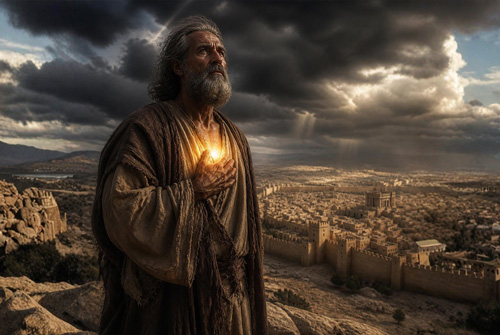
The golden thread this week that connects our Old Testament reading from Isaiah to our gospel from Mark is related to the role of John the Baptist as the voice of one crying out in the desert. John is the last of the line of Old Testament prophets, a line that began with Elijah and continues throughout all the prophets, including Isaiah, from whom our first reading comes this week. All of the prophets, in one way or another, through the Holy Spirit, proclaimed that God would forgive sins and restore His people to grace if they would repent of their sins, turn away from evil, and do what is right and just. John was preordained by God to be that last-in-the-line of prophets who would prepare the way of the Lord and announce His coming into the world (see the Canticle of Zechariah in chapter 1 of Luke). But, after John, we no longer need prophets because Christ came into the world at the time of John, and through Jesus, we have now heard all that we need to know directly from God for our salvation. There are no excuses now.
In our first reading, Isaiah proclaims comfort to Israel that the time of their salvation is at hand. There will be a voice crying out in the desert to prepare the way of the Lord who brings with him his recompense and his comfort, “and all the people shall see it together.” But one might ask the question: Why has that not happened in the past 2500 years since the time of Isaiah? And the answer to that question: It did happen at Christmas, and from that time forward, through the ministry of Christ and carried on by the church throughout history, we have all learned what is required of us. We will all be judged on how well we listened at His second coming.
Although we speak of His “first coming” at Christmas and His “second coming” at the end of time, there is also an unseen coming between the first and the second. It is an unseen coming because it is very personal to each of us. It is when Christ enters our hearts, and we accept what the prophets and the scriptures foretold and what the church has taught for so many years. It is then that we truly become Christians because we come to believe what prophets, parents, and scriptures have taught us, and the church is really TRUE. And it is through living according to that belief that we will avoid harsh judgment at His second coming.
Our second reading from 2nd Peter also addresses the question as to why the Lord has not returned as Isaiah promised: “The Lord does not delay his promise…but he is patient with you, not wishing that any should perish, but that all should come to repentance.” God has not delayed his promise; He wants to redeem us all, but that depends on our response to His call. How long will His patience last? Peter also tells us that this world will eventually come to an end. We really don’t know how that will happen. Will it be “dissolved in flames and the elements melted by fire”? However, it will happen; we can be assured that this world of sin and evil will come to an end, and those who have been faithful to the teachings of Christ and the church will be found in a “new heavens and a new earth.” That’s what we can look forward to if we pass the test.
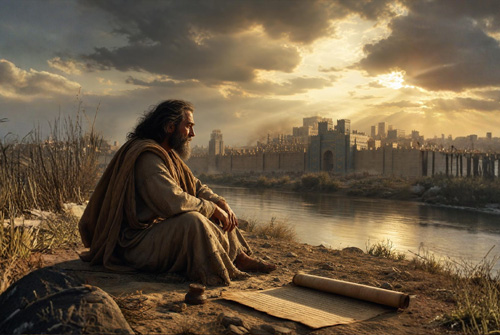
Our gospel passage from Mark highlights the role of John the Baptist as the one “crying out in the desert.” The overall message of Mark’s gospel is discipleship, and we have another perfect example of that discipleship in John the Baptist. John must have had tremendous charisma as we are told that all the people of Judea and Jerusalem went out to him at the Jordan River to confess their sins and receive the “baptism of repentance for the forgiveness of sins.” This also highlights the role of all the prophets as they each proclaimed that repentance was necessary for God’s forgiveness. John brought all the Old Testament prophecy to conclusion by proclaiming: “Behold, the Lamb of God, who takes away the sin of the world” (Jn 1:29). In other words: “Here He is; now pay attention to Him.” If we don’t heed that message, we will find ourselves terrified at His second coming rather than rejoicing.
Reference: Artwork copyright LPI