Twelfth Sunday in Ordinary Time
Reading 1: Jer 20:10-13
Responsorial Psalm: Ps 69:8-10, 14, 17, 33-35
Reading 2: Rom 5:12-15
Gospel: Mt 10:26-33
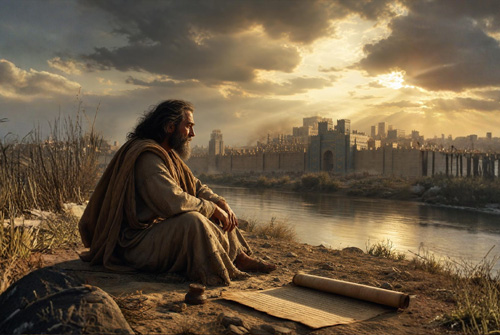
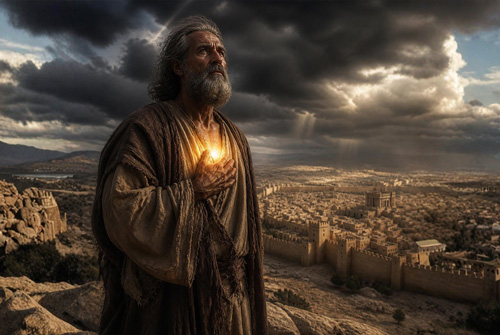
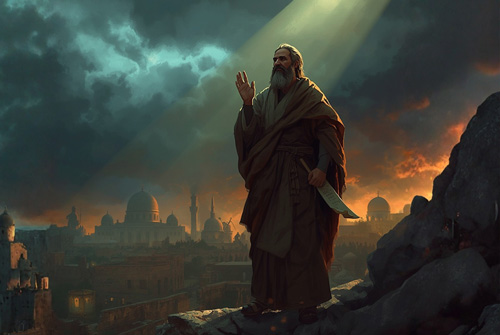
I think Jeremiah is the most fascinating of all the prophets as he lived during a very tumultuous time in Jerusalem. By the time he was born about 650 B.C., the northern kingdom of Israel had fallen to the Assyrians (722 B.C.); then Assyria fell to the Babylonians in 612 B.C. giving rise to the Babylonian empire that would soon swallow up the nation of Judah in 587 B.C. The people of Judah were terrified of the Babylonians, but a false prophet named Hananiah counseled the king that the power of Babylon would be broken if Judah would form an alliance with Egypt against Babylon. Jeremiah told the king and the people that Hananiah was a false prophet and if Judah did not repent of their sinfulness and trust in the Lord rather than in Egypt, then the Babylonians would conquer Judah, destroy Jerusalem, and carry the survivors into exile. No one wanted to hear his message and Jeremiah was constantly persecuted, imprisoned, and beaten.
Jeremiah’s whole life was spent castigating the people and their kings for their sinfulness and urging them to repent and return to the Lord or suffer the consequences of defeat and exile. I suggest you read chapter 7, called the Temple Sermon, as an example of his forceful prophesying. But he also held out the olive branch of God’s love and mercy if the people did return to the Lord and follow his commands. Read chapter 31 as an example of God’s promise of restoration of both Israel and Judah after their chastisement. The king listened to Hananiah rather than Jeremiah, rebelled against Babylon, and the nation of Judah and the city of Jerusalem were destroyed in 587 B.C.
Our reading this week comes from a section of chapter 20 called “Jeremiah’s Interior Crisis.” Jeremiah had just been scourged and locked in the stocks over night for his prophesying and he begins this section of chapter 20 at verse 7 by saying that God had tricked him into becoming a prophet: “You duped me, O Lord, and I let myself be duped.” And in verse 9 Jeremiah declares: “I will speak in his (God’s) name no more.” In other words, Jeremiah says: I Quit! Of course, God’s call of Jeremiah to the prophetic office was stronger than Jeremiah’s will to quit and he continued to prophesy for the remainder of his life. Jeremiah’s complaint in our reading is that all he ever received for his work as a prophet was persecution, and our reading is Jeremiah’s lament over his lot in life. Tradition tells us that Jeremiah remained in Jerusalem among the ruins for a time but was eventually carried into exile in Egypt by some of his countrymen who eventually murdered him while in Egyptian exile.
Jeremiah’s message for us this week is that doing God’s will and living according to our Christian principles can involve persecution. Are we to abandon those principles in the face of persecution or do we trust in the one who “rescues the life of the poor from the power of the wicked?” That message will be continued in our gospel passage.
In our second reading from Romans, St. Paul reminds us that the wages of sin is death. And even before the time of Moses and the coming of the Law, sin was ever present in the world even though there was no written law against sin. So, sin was prevalent in the world even though there was no written law that made certain acts sinful, and the result of that sin was death. But physical death is not the death that is spoken of here; it is the spiritual death of eternal separation from God. “But the gift is not like the transgression.” Even though the wages of sin is the death of eternal separation from God; the grace of God through the gift of his son offers us forgiveness for our transgressions, beckons us to look beyond physical death to the restoration of eternal life in that happy state of existence we call heaven.
In our gospel passage this week Jesus exhorts us to fear no one. Live our Christian values by “speaking in the light and proclaiming on the rooftops.” Our goal as true Christians is the life that comes after our physical life has ended. None of us wants to die physically, but if we truly believe what Jesus teaches us, then there is no reason to “fear the one who can kill the body but cannot kill the soul.” Rather, fear the one who can kill both.
The Golden Thread? Persecution often accompanies the Christian faith. Do we abandon that faith in the face of persecution or do we: “trust in the one who rescues the life of the poor from the power of the wicked.” If we succumb to fear in the face of persecution we must hear: “But whoever denies me before others, I will deny before my heavenly Father.”