The Octave Day of Christmas
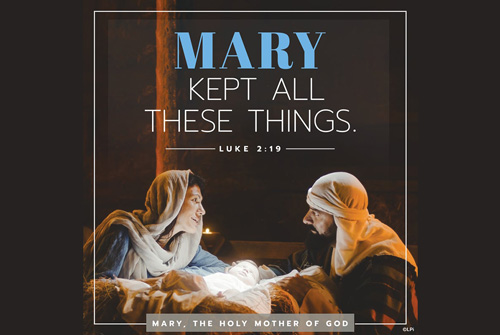
Solemnity of the Blessed Virgin Mary, the Mother of God
Reading 1: Nm 6:22-27
Responsorial Psalm: Ps 67:2-3, 5, 6, 8
Reading 2: Gal 4:4-7
Gospel: Lk 2:16-21
This Sunday, we celebrate the Solemnity of the Blessed Virgin Mary, the Mother of God. The “golden thread” that relates our first reading from the book of Numbers to our gospel from Luke seems to be God’s Blessing. In our first reading, God instructs Moses on how Aaron and his sons (the first priests of the Israelite people) should bless the people. So, God’s blessing is the primary emphasis of that passage. Our Responsorial Psalm carries on that theme in asking: “May God bless us in his mercy.”
Our gospel from chapter 2 of Luke is a familiar one to us as it relates the message of the angels to the shepherds and their reaction to that message. It is significant that the birth of the humble king (Jesus) is first proclaimed, not to kings or nobles, but to lowly shepherds who were considered ignorant, dirty and lawless in Israelite society. They were outcasts like prostitutes and tax collectors. And the message they received from the angels and were to proclaim to others was: “Today in the city of David a savior has been born for you who is Messiah and Lord.” That Messiah, whom the Jews had been praying for to deliver them from oppression, will bring glory to God and peace on earth. Peace, when we finally realize it, will be God’s blessing.
Since it is difficult to relate this Old Testament reading to our gospel, let me try to bluff my way through this with a little history lesson.
The Blessed Mother being referred to as the Mother of God is easy for us to understand as Catholic Christians and has been a staple of church teaching almost from the beginning of the Christian era. But it wasn’t always that way. It was declared a dogma of the church at the Council of Ephesus in 431 A.D. because of various heresies that arose in the early church. It is important to understand that heresies that arose in the first few centuries of Christendom were not always attempts to destroy the church; they were often attempts by well-intentioned individuals to explain the mystery of the Incarnation and the relationship between Christ and God. In other words, how could Jesus be totally human and totally divine? To a logical human mind, that doesn’t make sense. Several explanations of this relationship arose and were eventually declared heretical. For example, Arianism declared that Jesus was truly the Son of God but was a creation of God, just like all of humanity. This, of course is contrary to our Trinitarian belief of the co-eternal Father, Son and Holy Spirit. Therefore, according to Arianism, there was a time when the Son did not exist until he was created by God. Consequently, Jesus is not equal to God and is, in fact, subservient to God. Another declared that the divinity of Jesus was “swallowed up by his humanity like a drop of honey in the ocean.” Therefore, Jesus is mostly human. Others went the other way saying that Jesus was mostly divine, but his divinity left him on the cross and so it was only the human Jesus that died.
In relation to Mary, these heresies would hold that Mary was the mother of the human Jesus, but not the mother of God. The Council of Ephesus and other councils as well, wrestled with these various teachings and eventually declared Mary to be Theotokos; a Greek word that literally means, “God Bearer,” or, less literally, “The Mother of God;” thus declaring any teaching contrary to the co-eternal Trinity and Mary’s relation to that Trinity to be heretical.