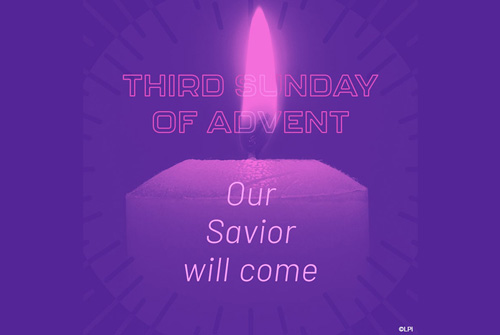
3rd Sunday of Advent, 2025

Post Date: December 10, 2025
Author: Ric Cross

Third Sunday of Advent

Reading 1: Is 35:1-6a, 10
Responsorial Psalm: Ps 146:6-7, 8-9, 9-10
Reading 2: Jas 5:7-10
Gospel: Mt 11:2-11

Individuals are conditioned by the society they live in and, therefore, the crimes of particular individuals disclose the corruption within society. In any society, only a few individuals are guilty of serious sin, but all of society is responsible because it is too often indifferent to that sin and fails to make it apparent that sinful behavior is unacceptable. That was true in the time of Isaiah and it is true in our world today. It is that indifference to sin that motivated the ancient prophets in the same way it should motivate us today. The prophets saw indifference to sin as devastating to man’s relationship with God. Isaiah and his disciples were acutely aware of human sinfulness and society’s indifference to that sin, and that is the key to understanding Isaiah’s message. And the message was simple: Sin and indifference to sin have brought on God’s wrath. Repentance is always possible, but there isn’t much time. God is about to punish Israel and Judah. But because they are the “Chosen People,” God will punish them but God will also save a remnant of the people and again restore them to their homeland. But first, God will use Assyria as the instrument of purification for Israel (north), and Babylon as the instrument for Judah (south). Then the purified remnant of the “Chosen People” will be restored to their homeland. That is essentially the message of the first 39 chapters of the Book of Isaiah, the majority of which were probably composed by Isaiah himself. We’ll talk about the other chapters composed by disciples of Isaiah many years later in another commentary.

Most of the ancient prophets of Israel can be identified and the period of their activity can be pinpointed within a few years. But that isn’t the case with the Book of the Prophet Isaiah. This book covers in excess of 200 years of time and is composed of oracles and poems composed by Isaiah himself during his lifetime, and by disciples who inherited the spirit of Isaiah and added to his work many years after his death.

Isaiah was from the southern kingdom of Judah and was active over the course of three kings of Judah which would date the activity of the historical Isaiah between 742 and 687 B.C. That means he was active at a critical moment of Israel’s history when Israel (north) was overthrown by the Assyrians in 722 B.C. Within a few years (701 B.C.) the Assyrians ravaged Judah as well but were unable to capture Jerusalem. Judah’s destruction came many years later at the hands of the Babylonians in 587 B.C.

Most scholars attribute the first 39 chapters of this book to the historical Isaiah along with some material added by his disciples. Our reading this week comes from chapter 35 so we are probably in that time frame between the Assyrian conquest of Israel and about 100 years or so before the Babylonian conquest of Judah. But it is in these first 39 chapters that we find Isaiah prophesying the fall of Israel; the ravaging of Judah by the Assyrians; the unsuccessful siege of Jerusalem by Assyria; the eventual conquering of Judah by the Babylonians; the birth of Immanuel; and Israel’s deliverance after their purification. And it is in chapter 35 (our reading this week) that we are given the vision of Israel’s deliverance with imagery of the desert blooming and the glory and splendor of God made manifest; the deaf will hear and the blind will see and the mute will speak and those ransomed by God will return to Zion amid gladness and joy, and sorrow and mourning will no longer exist on God’s holy mountain.

So the message of our first reading this week (as it will be throughout Advent) is hope/anticipation of being restored to God’s holy mountain (heaven). But first we have to understand what got us to chapter 35 and that was Isaiah’s prophecy concerning the sins and indifference to sin of Israel and Judah. Because of sin and indifference, the Jews must be purified; and so must we. The message: Be purified! Prepare yourselves to be restored to God’s holy mountain through purification of your sins. To Isaiah’s contemporaries, purification would come through obedience to God and the reward would be restoration to their homeland of Israel. To us, purification comes through the sacraments of the church and the reward is restoration to our homeland of heaven.

Our gospel passage from Matthew 11 contains some interesting points. First, we have John the Baptist asking through his disciples if Jesus truly is the “one who is to come.” That seems curious because John baptized Jesus and testified to seeing the Holy Spirit descend and rest upon him. Why would he ask that question? It is probable that, although John believed that Jesus was the messiah, Jesus didn’t fulfill John’s expectations. John, like all faithful Jews of the time, expected the messiah to be essentially a reincarnation of King David and his role would be to re-establish the nation of Israel as it was under King David; independent and free of oppression. Obviously, Jesus’ intentions and John’s expectations were not on the same page but Jesus reminds John of Isaiah’s prophecy concerning the things that will occur when the messiah comes, and those things that are happening now because of Jesus’ ministry: the blind see, the deaf hear, the lame walk, the dead are raised. And then a slight rebuke to John: “Blessed is the one who takes no offense at me.”

But Jesus follows the rebuke of John by attesting to his greatness in the eyes of God. The Jews of the time believed that Malachi was the last prophet (approx. 450 B.C.) and that there would be no more prophets until Elijah returned to “prepare the way of the Lord.” Jesus confirms to the crowds that what they went out into the desert to see was, in fact, a prophet. Not only a prophet but the one Malachi predicted and the one the Jews believed would be Elijah. Two verses past the end of our gospel this week, Jesus makes it very plain: “If you are willing to accept it, he is Elijah, the one who is to come. Whoever has ears ought to hear.”

The Golden Thread??? Isaiah tells us that when the messiah comes, the blind will see, the deaf will hear, the lame will walk, the mute will sing. Jesus tells John’s disciples, go and tell John what you see. The golden thread may be easy to spot but the message requires commitment on our part. During Advent, we anticipate the return of Christ at the end of time, and we believe that when that happens, there will be paradise on God’s holy mountain (heaven) and those who have been purified and are prepared for Christ’s return will be rewarded with return to the holy mountain. But when is he coming? Our second reading from the Letter of James reminds us that what is required of us is patience. We have been told and we believe that Jesus will return; but when? “The Lord does not delay his promise, as some regard ‘delay,’ but he is patient with you, not wishing that any should perish but that all should come to repentance” (2 Pt 3:9). Be a good Boy (or Girl) Scout – be patient and be prepared.

Recent Posts

17th Sunday in Ordinary Time 2026

17th Sunday in Ordinary Time 2026

Seventeenth Sunday in Ordinary Time Reading 1: 1 Kgs 3:5, 7-12 Responsorial Psalm: Ps 119:57, 72, 76-77, 127-128, 129-130 Reading 2: Rom 8:28-30 Gospel: Mt 13:44-52 Let me start this reflection with a little biblical history some may or may not be familiar with. The...

Monica’s Praise Report 9-22-26

Monica’s Praise Report 9-22-26

Praise be Jesus Christ, now and forever! How wonderful He is. He is faithful and His mercy and grace abound. He is relentless in His pursuit of us, never giving up on us or leaving us when we but just turn toward Him. Thank You, God, for Your steadfastness and...

16th Sunday in Ordinary Time 2026

16th Sunday in Ordinary Time 2026

Sixteenth Sunday in Ordinary Time Reading 1: Wis 12:13, 16-19 Responsorial Psalm: Ps 86:5-6, 9-10, 15-16 Reading 2: Rom 8:26-27 Gospel: Mt 13:24-43 Once again, this week we have a shorter form of the gospel that may be proclaimed at Sunday Mass, but I eliminated it...

15th Sunday in Ordinary Time 2026

15th Sunday in Ordinary Time 2026

Fifteenth Sunday in Ordinary Time Reading 1: Is 55:10-11 Responsorial Psalm: Ps 65:10, 11, 12-13, 14 Reading 2: Rom 8:18-23 Gospel: Mt 13:1-23 There is a shorter version of the gospel that may be proclaimed this week, but I eliminated it above to save some space. Our...

14th Sunday in Ordinary Time 2026

14th Sunday in Ordinary Time 2026

Fourteenth Sunday in Ordinary Time Reading 1: Zec 9:9-10 Responsorial Psalm: Ps 145:1-2, 8-9, 10-11, 13-14 Reading 2: Rom 8:9, 11-13 Gospel: Mt 11:25-30 Zechariah is one of the post-exilic prophets, meaning he received the prophetic call after the Babylonian Exile,...

13th Sunday in Ordinary Time 2026

13th Sunday in Ordinary Time 2026

Thirteenth Sunday in Ordinary Time Reading 1: 2 Kgs 4:8-11, 14-16a Responsorial Psalm: Ps 89:2-3, 16-17, 18-19 Reading 2: Rom 6:3-4, 8-11 Gospel: Mt 10:37-42 Our first reading from 2nd Kings is an interesting story about the prophet Elisha and a Shunammite woman who...

Monica’s Praise Report 6-22-26

Monica’s Praise Report 6-22-26

Praise be Jesus Christ, now and forever. Praise be His most holy Name. All glory be to the Father, the Son, and the Holy Spirit. Glory and honor to Him, who is, who was, and always will be. Praise be to Him who bore our sufferings due to our sins. His mercy endures...

12th Sunday in Ordinary Time 2026

12th Sunday in Ordinary Time 2026

Twelfth Sunday in Ordinary Time Reading 1: Jer 20:10-13 Responsorial Psalm: Ps 69:8-10, 14, 17, 33-35 Reading 2: Rom 5:12-15 Gospel: Mt 10:26-33 I think Jeremiah is the most fascinating of all the prophets as he lived during a very tumultuous time in Jerusalem. By the...

Solemnity of the Body and Blood of Christ

Solemnity of the Body and Blood of Christ

Reading 1: Dt 8:2-3, 14b-16a Responsorial Psalm: Ps 147:12-13, 14-15, 19-20 Reading 2: 1 Cor 10:16-17 Gospel: Jn 6:51-58 This Sunday we celebrate the Solemnity of the Most Holy Body and Blood of Christ, also known as Corpus Christi Sunday. It is the celebration of the...

The Solemnity of the Most Holy Trinity 2026

The Solemnity of the Most Holy Trinity 2026

The Solemnity of the Most Holy Trinity Reading 1: EX 34:4b-6, 8-9 Responsorial Psalm: Dn 3:52, 53, 54, 55, 56 Reading 2: 2 Cor 13:11-13 Gospel: Jn 3:16-18 This Sunday we celebrate the Solemnity of the Most Holy Trinity. The mystery of the Holy Trinity is the central...

Para el segundo año de preparación sacramental, los padres siguen siendo los primeros maestros de la fe (CCC n.º 2226). Este es un rol continuo tanto para los padres como para la vida de los estudiantes.

La preparación sacramental se llevará a cabo una vez al mes. Se pide a las familias que asistan semanalmente a la misa dominical, compartan el Evangelio en casa, participen en un retiro, recen el Rosario y que los padres asistan a una charla mensual con nuestro querido sacerdote.

Se ponen recursos a disposición de los padres, especialmente en lo relativo a la misa. Se pide a los estudiantes que traigan un misal para que lo firmen al finalizar la misa de su elección (sábado o domingo).

A continuación, se presentan las fechas de las charlas dirigidas a los padres. Los estudiantes asistirán a clases en un aula en la misma fecha y horario: de 6:30 p. m. a 8:00 p. m.

Se realizarán evaluaciones a los estudiantes; por favor, consulten las Pautas Sacramentales.

La preparación para la Primera Reconciliación y la Primera Comunión está abierta a todos los jóvenes bautizados - a partir del segundo grado escolar - que cumplan con los siguientes requisitos del programa:

  • La familia debe ser miembro registrado de la Parroquia del Sagrado Corazón. Si no son miembros registrados del Sagrado Corazón, los padres deben presentar una carta del párroco de la parroquia en la que estén registrados, otorgando permiso para que el niño se prepare y celebre los sacramentos en el Sagrado Corazón. También se requiere el permiso del párroco si la familia está registrada en el Sagrado Corazón, pero solicita que la celebración se realice en otra iglesia católica.
  • Los padres deben presentar una copia original del certificado de bautismo del niño antes de la fecha límite establecida. Si el niño no ha sido bautizado en la fe católica, realizará una "Profesión de Fe".
  • El niño debe contar con un mínimo de un año de educación religiosa previa, cursada en el programa de formación en la fe de la parroquia (FE EN EL HOGAR) o en una escuela católica.
  • El niño debe estar inscrito y participando activamente en el año actual del programa de educación religiosa de la parroquia (Preparación Sacramental) o en una escuela católica.
  • La familia debe asistir a la Misa dominical con regularidad.
  • El niño y sus padres deben asistir a TODAS las sesiones de preparación sacramental.
  • Una vez completadas todas las sesiones de preparación requeridas, el niño participará en una entrevista para evaluar su disposición para recibir los sacramentos.

El Párroco, el Coordinador de Preparación Sacramental y los padres determinarán conjuntamente la disposición del niño - tanto catequética como espiritual - para recibir los sacramentos.

El año pasado, las familias de primer año siguieron el nuevo plan de estudios «Fe en el hogar». Aunque todavía tenemos mucho en lo que podemos crecer, nos alegra enormemente que nuestras familias hayan completado el año y que ahora estén practicando su fe y siguiendo un nuevo estilo de vida. «Fe en el hogar» es un programa novedoso en el que nuestras familias no tienen que asistir en persona ni semanalmente, sino solo una vez al mes. Se pide a las familias que asistan a la misa dominical cada semana, compartan el Evangelio en casa, participen en un retiro, recen el Rosario y que los padres asistan a una charla mensual con nuestro querido sacerdote. Hay recursos disponibles para los padres, especialmente para la Misa. Se pide a los estudiantes que traigan un libro de misa para que lo firmen al finalizar la misa que elijan (sábado o domingo). A continuación, se presentan las fechas de las charlas para padres; los estudiantes estarán en clase el mismo día y horario: 6:30 PM a 8:00 PM.

For year 2, sacramental preparation, parents are still the first teachers of faith CCC#2226. This is an ongoing role for the parents and for the students' lives.

Sacramental preparation would be once a month. Families are asked to attend weekly Sunday mass, share the Gospel at home, participate in a retreat, pray the Rosary, and have parents attend a monthly talk with our beloved priest.

Resources are available to parents, especially for Mass. Students are asked to bring a Mass book to be signed by the end of the Mass of their choice (Saturday or Sunday).

Here are the dates for parent talks. The students will be in a classroom setting on the same date and time: 6:30 PM to 8:00 PM

Evaluations will be held for students, please refer to the Sacrament Guidelines.

First Reconciliation and First Communion preparation is open to all baptized youth, second grade or older, who meet the following program requirements:

  • Family must be registered members of Sacred Heart Parish. If not registered members of Sacred Heart, the parents must provide a letter from the pastor of the parish in which they are registered, granting permission for the child to prepare and to celebrate the sacraments at Sacred Heart.  Permission must also be granted by the pastor if registering at Sacred Heart, but requesting the celebration at another Catholic Church.
  • The parents must provide an original copy of the child’s Baptism Certificate by the declared deadline. If not baptized catholic, the child will make a “Profession of Faith”.
  • The child must have a minimum of one year of previous religious education in the parish faith formation program (FAITH AT HOME) or catholic school.
  • The child must be enrolled and actively participating in the current year of religious education in the parish religious Sacramental Preparation or catholic school.
  • The family must attend Sunday Mass regularly.
  • The child and their parents must attend ALL sacrament preparation sessions.
  • Upon completion of all required preparation sessions, the child will participate in an interview to evaluate the child’s readiness to receive the sacraments.

The Pastor, Sacramental Preparation Coordinator, and the parents together determine the child’s readiness, both catechetical and spiritual, to receive the sacraments.

Last year, first-year families followed the new Faith at Home curriculum. Even though we have a lot to grow in, we are very happy that our families have completed the year and are now practicing their faith and following a new way of life.  

Faith at Home is a new program where our families do not have to come in person weekly, but once a month. Families are asked to attend weekly Sunday mass, share the Gospel at home, participate in a retreat, pray the Rosary, and have parents attend a monthly talk with our beloved priest.  

Resources are available to parents, especially for Mass. Students are asked to bring a Mass book with them to be signed by the end of any Mass of their choice (Saturday or Sunday).  

Here are the dates for parent talks. The students will be in a classroom setting on the same date and time:

April 20th from 6:30 PM to 8:00 PM

Hi!