Eighteenth Sunday in Ordinary Time
Reading 1: Ecc 1:2; 2:21-23
Responsorial Psalm: Ps 90:3-4, 5-6, 12-13, 14, 17
Reading 2: Col 3:1-5, 9-11
Gospel: Lk 12:13-21
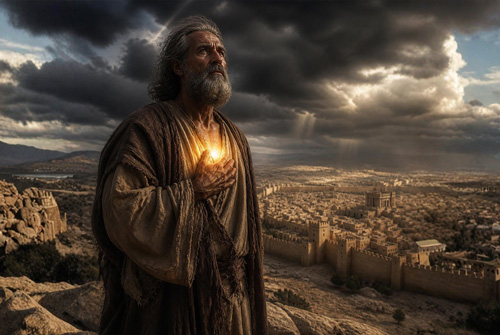
Well, are you depressed after our first reading from Ecclesiastes? Ecclesiastes says that everything in this life is vanity, a chase after wind. Work hard to accumulate wealth but you will leave it to another who has not labored over it. All our days are sorrow and grief, and our minds are never at rest. Even the accumulation of knowledge is futile because the divine plan of God is hidden from humanity and the knowledge we accumulate on earth is as nothing compared to divine knowledge.
But if we read further into the Book of Ecclesiastes, we will see that it is really a treatise on the futility of earthly life in comparison to the endless joy and knowledge we will have in heaven. And it is a treatise against the accumulation of great wealth; we never know when we will draw our last breath and what we have accumulated will be left to others. The final verse of the book (12:13) sums up the point of Ecclesiastes: “The last word, when all is heard: Fear God and keep his commandments, for this is man’s all; because God will bring to judgment every work, with all its hidden qualities, whether good or bad.”
An interesting point made in the introduction to this book in the New American Bible is that Ecclesiastes marks an advancement in the ancient concept of earthly rewards and punishment. Prior to this advancement the ancient thought was that wealth and prosperity were a reward from God for fidelity. But illness and disaster were a punishment for infidelity. Ecclesiastes looks past earthly conditions such as wealth or destitution as reward or punishment from God to a realization that bad things can happen to good people, and they are not always a punishment from God. Bad people can do bad things to good people. Ecclesiastes looks to a heavenly solution to human suffering where “God will bring to judgment every work, with all its hidden qualities, whether good or bad.”
Ecclesiastes was probably written in the 4th century B.C. and although we are told the author’s name is Qoheleth (supposedly pronounced: Ko-hel-ith), most scholars believe that is probably a pseudonym as the Greek translation of Qoheleth is something like: “One who convokes an assembly.” Qoheleth identifies himself as “David’s son, king in Jerusalem” so early belief was that the author was Solomon, but that is also believed to be a literary device to lend authority to the book – a practice in ancient times of putting someone else’s name on a written work to give it an air of authority. So, we really don’t know who wrote Ecclesiastes.
The theme of this reading and the “golden thread” that connects it to the gospel is detachment from earthly things as earthly things are transitory (a chase after wind) whereas heavenly things are eternal. Even the accumulation of great knowledge is a chase after wind as we can never comprehend God’s plans or God’s reasoning. The golden thread in this first reading is also brought out in our second reading where St. Paul tells us to: “Think of what is above, not of what is on earth.” We are not to concern ourselves with our earthly condition and are to use our earthly wealth for the benefit of the community and to put to death our immorality because God will bring to judgment every work. He reminds us that greed is idolatry (idolizing the almighty dollar), and that we are to use our excess wealth for the betterment of the community, because the excess wealth we accumulate is wealth that others are deprived of.
The theme is also carried out in our gospel this week when someone in the crowd was greedy and wanted Jesus to force his brother to share the inheritance. Greed is self-centered and has no relation to the community. “Guard against greed as life does not consist in possessions.” And in the parable of the greedy rich man who tore down his barns to build bigger ones and considers himself content and wealthy for the remainder of his life: “You fool, this night your life will be demanded of you; and the things you have prepared, to whom will they belong? Thus it will be for all who store up treasure for themselves but are not rich in what matters to God.”
A major theme of Luke’s gospel is the concept of discipleship; a discipleship that renounces the earthly world and earthly values to search out the heavenly values that we are called to. Greed is not compatible with discipleship. Of course, we must take care of ourselves and our families and every individual must make the personal decision as to where to draw the line between “taking care of” and “storing up.” Sometime in the future we will have to face God, and we will not be judged according to the earthly treasures we have accumulated, but according to the treasures we have accumulated in heaven.