The Solemnity of the Most Holy Body and Blood of Christ
READING 1: GN 14:18-20
RESPONSORIAL PSALM: PS 110:1, 2, 3, 4
READING 2: 1 COR 11:23-26
ALLELUIA: JN 6:51
GOSPEL: LK 9:11B-17
This Sunday we celebrate the Solemnity of the Most Holy Body and Blood of Christ; also known as Corpus Christi Sunday. As we are celebrating the Body and Blood of Christ in the Eucharist, the readings are all very Eucharistic in nature and a cursory reading of them will make that apparent. For example, in our first reading we are told that Melchizedek “brought out bread and wine.” In our second reading, St. Paul reminds us of the prayer of consecration we hear at every Mass: “This is my body that is for you,” and “This cup is the new covenant in my blood.” Our celebration this week is the celebration of that most precious Body and Blood of Christ. But there is one very interesting passage in our first reading from Genesis concerning Melchizedek that I think we should be aware of.
Ever wonder who Melchizedek was? He is a very enigmatic figure. The only place we meet him is in this chapter of Genesis, although reference is made to him in Hebrews 6 & 7 and in Psalm 110. Genesis 14 comes before Abraham receives the Covenant of Circumcision in chapter 17. So, theoretically, Abraham is not yet a Jew at the time he meets Melchizedek and, as Abraham is the progenitor of the Jewish people, we have no Jews and, therefore, no Jewish religion and no Jewish priesthood at the time of Genesis 14.
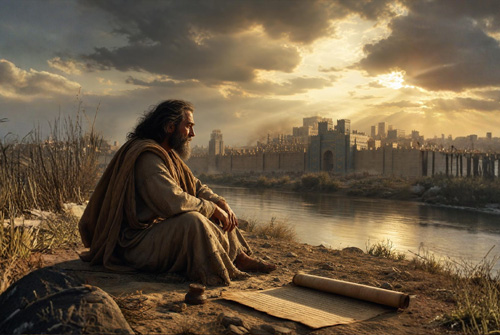
Melchizedek is a Canaanite king and is presented to us as the “King of Salem,” which is traditionally identified with the city that will eventually become known as Jerusalem. Salem means “peace,” so he is also often referred to as the “king of peace.” But, most importantly, he is referred to as being a “priest of God most high.” What that simply means is that, before we have a Jewish priesthood or a Jewish religion, we have a Canaanite (a non-Jew) who is a priest of God most high who brought out a sacrifice of bread and wine, blessed Abraham, and received a tithe from him.
In chapter 7 of Hebrews Melchizedek is referred to as a “type of Christ,” in other words, a preview of Christ. By the time Hebrews was written, we do have a Jewish priesthood, and every priest had to be a descendent of the tribe of Levi. The role of the priest was to teach the people the law and to offer sacrifice on behalf of himself and the people. Jesus was descended from the tribe of Judah so could never have served as a priest according to Jewish law. But Melchizedek (a Canaanite non-Jew), as a priest of God most high, is “made to resemble the Son of God, and remains a priest forever.” (Heb 7:3); therefore, a type of Christ. In Psalm 110, the author (presumably King David) states: “The Lord said to my Lord.” In other words, what David is saying in this Psalm is that God said to someone greater than David (who David refers to here as “my Lord”): you are “a priest forever according to the order of Melchizedek.” And that “someone greater than David” is Jesus, a descendent of David, who is a “priest forever according to the line of Melchizedek.” His role as a priest of The Most High God according to the line of Melchizedek is to teach the law and to offer sacrifice on behalf of the people.
What I have written above may be a little garbled and hard to follow but the point of it is that in the Jewish mind at the time of Christ, no one could be a priest other than a Levite, and yet we have here another example from the divinely inspired Old Testament that there was a non-Levite priest of the Most High God long before there were Levites. Therefore, Melchizedek’s priesthood is not dependent upon ethnicity or heritage; his priesthood is from God. And Melchizedek is a “preview” of another non-Levite priest of the Most High God who will be a priest forever in the line of Melchizedek; the line appointed by God, not by heritage.
Our gospel passage from Luke is the multiplication of the loaves and fish but the words used to describe this event remind us of Luke’s version of the institution of the Eucharist in Lk 22:19: “Then he took the bread, said the blessing, broke it, and gave it to them, saying, ‘This is my body…” It is that Eucharist, instituted by Christ, that we celebrate this week in “The Solemnity of the Most Holy Body and Blood of Christ.”