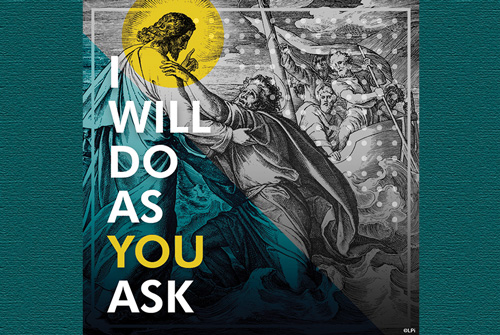
A Reflection on the Readings for the Fifth Sunday in Ordinary Time, February 16, 2025
Reading 1: Is 6:1-2a, 3-8
Responsorial Psalm: Ps 138:1-2, 2-3, 4-5, 7-8
Reading 2: 1 Cor 15:1-11
Gospel: Lk 5:1-11
Last week, our first reading dealt with God’s call to Jeremiah to be a prophet to the nations. Jeremiah protested that he was too young to be a prophet, but God put Jeremiah’s fears to rest by telling him that God would put His words into Jeremiah’s mouth and that Jeremiah had nothing to fear. This week, our first reading deals with the call of Isiah to the prophetic office, and once again, Isaiah protests that he is unfit. He is a man of unclean lips living among people of unclean lips, and he has seen the glory of God upon his throne and is, therefore, doomed to die. Once again, as with Jeremiah, Isaiah’s fears are put to rest. God purified Isaiah’s lips and purged him of his sins, giving him the courage to carry out his mission of prophecy. That courage comes through faith that God indeed had taken away Isaiah’s sins, and he was now fit to carry out his mission. Isaiah’s response: “Here I am Lord, send me.”
We should see in these two “calls from God” that our relationship with God is always initiated by God. Think of St. Paul on the road to Damascus. He had no intention of becoming the “Apostle to the Gentiles” until God called him. Paul responded to the call, as did Jeremiah and Isaiah, and suddenly everything changed for Paul.
If we had no knowledge of God what would ever cause us to turn to God? But God calls us by planting a seed of faith in us at our conception, and that seed is nurtured by the scriptures and the teachings of the church. If we respond to that nurturing, we recognize God’s presence in the world and respond to that call. However, before the scriptures and the teachings of the church can nurture that seed, it must first be nurtured in the home, the domestic church.
As Catholic Christians, we believe that God has a plan for each of us. We are not all going to be prophets or priests or bishops or biblical scholars or teachers of the faith. Some are called to married life and some to the religious life but each of us is called by God to fill some role in the church. It is important for us to recognize that the call is always initiated by God, just as it was with Jeremiah, Isaiah, and the apostles. We do not choose the vocation we are to fulfill in the church; God chooses the vocation and calls each of us to respond. “Know this first of all, that there is no prophecy of scripture that is a matter of personal interpretation, for no prophecy ever came through human will; but rather human beings moved by the Holy Spirit spoke under the influence of God” (2 Pt 1:20-21). Our job is to respond, through faith, to God’s call and trust that God will give us the grace necessary to carry out our mission.
In our second reading, St. Paul reminds us of the nurturing we receive through the scriptures and the teachings of the church. He is reminding his readers of the gospel that was preached to them and that: “Through it you are also being saved.” That which was taught to them was TRUTH, and that truth will set them free and will save them if they put their faith in that truth.
Our gospel also deals with God’s call, this time to those who would become apostles, the first bishops of our church, but there is more here than meets the eye. Simon is called to put his boat out into deeper water and lower the nets for a catch. Simon, like Jeremiah and Isaiah, protests but eventually agrees. Jesus’ call here is not simply to move to deeper water; it is a call to move to a deeper faith. Simon’s acceptance of Jesus’ call is rewarded by a huge catch of fish; but his true reward is a deeper faith in Jesus. Simon’s response to that deep faith is an act of contrition: “Depart from me, Lord, for I am a sinful man.” It is also an act of faith because: “they left everything and followed him.”
We are all called to participate in the apostolate of the church, and our ability to do so is totally dependent upon our union with Christ. In the many and various vocations, we are called to fill in the church, whether as members of the laity or as religious, we are called to those vocations by God through the Holy Spirit. In order to respond to the promptings of the Holy Spirit, we must be in complete union with God through Christ, and it is through the sacraments of the church, particularly the Eucharist, that we maintain that union.
The “golden thread” this week is God’s call. Seeing that call so vividly presented to us in our scriptures this week will, hopefully, cause each of us to prayerfully turn to God and ask that he make his plan for each of us known.
Reference: ©LPI