A Reflection on the Feast of the Presentation of the Lord, February 2, 2025
Reading 1: Mal 3:1-4
Responsorial Psalm: 24:7, 8, 9, 10
Reading 2: Heb 2:14-18
Gospel: Lk 2:22-40 or 2:22-32
When something is presented to us, it is made manifest to us, and we expect to see it clearly because it is made apparent to our senses. But the physical senses only tell us how the object appears. To fully understand something, we must learn not only how it appears but also its value. We must understand the “why” as well as the “what.”
This Sunday we celebrate the feast of “The Presentation of the Lord,” also often referred to as “Candlemas.” It commemorates the fulfillment of the Jewish law that a male child was to be circumcised and consecrated to God on the eighth day after birth. But it also celebrates the manifestation of Jesus Christ as the fulfillment of God’s promise of salvation to the Jewish people.
This feast is always celebrated on February 2nd, so it does not always occur on a Sunday, but Candlemas, occurring 40 days after Christmas, formally concludes the celebration of the Nativity of the Lord we celebrate at Christmas and events now point to the Resurrection of Christ at Easter as we enter the Extraordinary Liturgical Seasons of Lent and Easter.
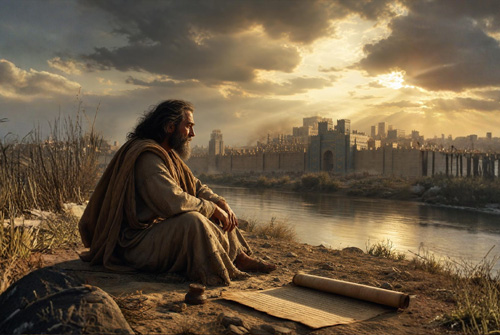
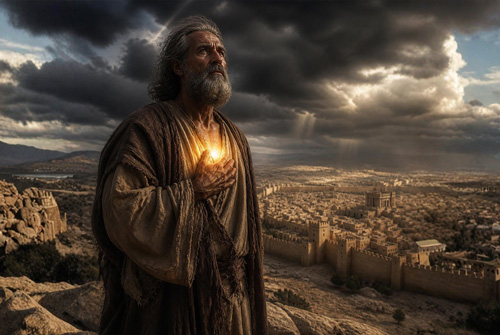
Our first reading is from the prophet Malachi, who was one of the first to return to Jerusalem after the Babylonian Exile (probably around 450 B.C.). What he found was that these early repatriated Israelites were intermarrying with Gentiles, were not observing Mosaic Law, and their priests were offering blemished sacrifices. Malachi’s prophecy is that the day of the Lord is coming when the messenger of the Lord will purify Israel like the refiner’s fire, which burns away all impurities, or like the fuller’s lye, which bleaches everything white. The messenger will particularly purify the “sons of Levi,” the priests, so they will offer pure sacrifices that will be pleasing to the Lord.
The reproaches of Malachi toward the people and the priests probably set in motion the reforms of Ezra and Nehemiah that came about a few years later. But because of his reproaches against the people and the priests, the author of this book apparently wanted to conceal his identity, so he assumed the pseudonym “Malachi” which, in Hebrew, means: “My Messenger.” Consequently, we don’t know the true identity of the author of the Book of the Prophet Malachi.
Notice the prophetic nature of this first reading: “Lo, I am sending my messenger to prepare the way before me.” The people would have thought this “messenger” was a reference to Elijah, whom it was believed would return to earth to prepare the way for the Messiah. Jesus, however, quoted this prophecy in reference to John the Baptist (Mt 11:10). John prepared the way. However, several hundred years after Malachi’s prophecy, we see that the true messenger of the Lord is Christ.
“And suddenly there will come to the temple the Lord whom you seek.” And when he comes, he will be made manifest, not only physically seen with our human eyes but also with the eyes of faith, as did Simeon and Anna in our gospel this week. Our human eyes tell us the “what,” but the eyes of faith tell us the “why.” Seeing with the eyes of faith means we will see more deeply than with the eyes of the body. We understand the meaning of what we are experiencing with our eyes, and we experience Jesus in a way we cannot experience him with our eyes. And when we experience that meaning in Jesus, we are also able to experience that meaning in others around us who also see with the eyes of faith. Jesus comes to purify and free from sin. Those who can see him with the eyes of faith, who are able to see the “why” of his Incarnation and death for our redemption. “The Lord whom you seek” is seen by the eyes of faith, and he will purify those who have faith. He will also “purify the sons of Levi” (the priests) so they will offer a pure sacrifice to the Lord. “Then the sacrifice of Judah and Jerusalem will please the Lord.” The church believes that pure and pleasing sacrifice is fulfilled in the Holy Sacrifice of the Mass.
Our Responsorial Psalm is a song of praise for the revelation we receive through the Presentation wherein we begin to see with the eyes of faith: “Who is the king of glory? It is the Lord!”
Our second reading from the Letter to the Hebrews reminds us that because Jesus came into this world in the flesh, he is able to share in the trials and tribulations we all face in our daily lives. Therefore, Jesus is able to see and to value each of us because he has experienced everything we experience. Jesus is the “faithful high priest before God to expiate the sins of the people.”
Our gospel is a fulfillment of the prophecy of Malachi: “And suddenly there will come to the temple the Lord whom you seek.” Our gospel also presents the fulfillment of Jewish law in the naming and circumcision of Jesus on the eighth day: “Every male that opens the womb shall be consecrated to the Lord.” However, it also presents two faithful people (Simeon and Anna) who are able to SEE this infant with the eyes of faith. Notice it is not the learned scholars or temple priests who see the child through the eyes of faith. It is two individuals who have been praying for years for the restoration of God’s rule in Israel, and they are able to see the birth of Jesus as the fulfillment of those hopes. But Jesus will establish God’s rule well beyond the borders of Israel as Simeon tells us that Jesus will be a “light for revelation to the Gentiles, and the glory of your people Israel.”
This feast is to begin outside the darkened church, with the congregation processing into the church with unlit candles. As the candles are lit inside, the light begins to spread and diffuse throughout the church, and we see that diffusion of light as a representation of the light of Christ made apparent to us in the Presentation of the Lord. Without faith, we would see only candlelight, but through the eyes of faith, we see Jesus, the light of the world.
Reference: Artwork ©LPi