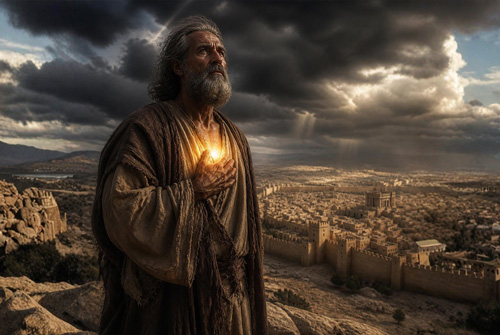
A Reflection on the Readings for the Second Sunday in Ordinary Time, January 19, 2025
Reading 1: Is 62:1-5
Responsorial Psalm: Ps 96:1-2, 2-3, 7-8, 9-10
Reading 2: 1 Cor 12:4-11
Gospel: Jn 2:1-11
We are again in the Season of Ordinary Time, as compared to an Extraordinary Liturgical Season such as Advent, Christmas, Lent or Easter. Ordinary Time is far from ho-hum ordinary. It is distinguished from the Extraordinary Seasons in that, in general, there is a theme to be found in the readings for each of the individual 34 Sundays of OT. In the Extraordinary Seasons there is a theme that runs through the entire season. That theme is the “golden thread” that connects the Old Testament reading each Sunday to the gospel. Our readings this week seem to reflect the theme of matrimony, and our first reading from chapter 62 of Isaiah is entitled “Jerusalem the Lord’s Bride.”
The Book of the Prophet Isaiah is the most prominent prophetic book of the Old Testament, and, after the Book of Psalms, Isaiah is the Old Testament book most often quoted in the New Testament. Isaiah is important because it covers over 250 years of history, so we get an insight into the early Jewish community during crucial times before, during, and after the Babylonian Exile. The book is loosely divided into 1st, 2nd and 3rd Isaiah, reflecting those time periods. The first 39 chapters are 1st Isaiah, and the authorship is attributed to the prophet Isaiah himself. These chapters show an attempt by Isaiah to preserve the Davidic dynasty and the holy city of Jerusalem. Chapters 40 to 55 are considered 2nd Isaiah and are attributed to the disciples of Isaiah. These chapters appear to be written during the exile and reflect the destruction of Jerusalem and the Babylonian Exile. The final chapters, 56 to 66, are 3rd Isaiah reflecting the return from exile and the restoration of Jerusalem and the temple and are attributed to disciples of the disciples of Isaiah.
It is important to see the Book of Isaiah as much more than a history of the nation of Israel before, during, and after the exile. It should be seen as a history, not of the nation of Israel, but of the people of Israel and their covenantal relationship to God. 1st Isaiah is a plea to turn back to God and to restore that relationship. 2nd Isaiah shows the punishment that comes from failing to heed God’s plea through his prophets. 3rd Isaiah shows God’s fidelity in restoring the nation through a purified remnant of the people after the punishment of exile. If we see these chapters in that light, then we can see that they apply not only to the ancient Israelite people but to our lives as well. God pleads with us to turn to him and to turn away from evil. God warns us through the scriptures that there are consequences for failing to do so. But also tells us that he will forgive and restore those who turn back to him with a pure and contrite heart.
God’s fidelity is often depicted as a marriage between God and the people, and in our first reading, we have the restored Jerusalem as the Lord’s bride. That bride will “shine forth like the dawn” will be called “by a new name” (indicating a new state of happiness), will be a “glorious crown in the hand of the Lord” and will no longer be called “forsaken” or “desolate.” God will rejoice in his bride and call the land his spouse. And if we apply those verses to ourselves in the 21st century we see how God will rejoice in us if we heed the message of Isaiah given to us over 2500 years ago.
In our second reading from 1st Corinthians, St. Paul reminds us that, although we are all Christians, we do not all possess the same gifts of the Holy Spirit. Each of us has gifts and talents that we are expected to put to good use to build up God’s kingdom. We should be joyful in the gifts each of us receives and not be jealous of the gifts others may have and not imitate the gifts of others.
Our gospel passage from John is, of course, the Wedding Feast at Cana, where, we are told, Jesus performed his first public miracle of changing water into wine. Again, there is a lot more here than meets the eye. John often refers to the miracles of Jesus as “signs” and this sign at Cana is the first of seven signs that John will relate in his gospel. John’s gospel is the most theological of the four gospels, and, therefore, John’s interest is less in the signs themselves than in what those signs signify. For example, notice that the water came from: “Six stone water jars there for Jewish ceremonial washings.” What is changed here is not only water but the water of Jewish ceremonial washings; in other words, a new age has dawned and the old laws no longer apply. This miracle signifies the arrival, through Jesus, of a new messianic age, and the new wine of this new messianic age is far superior to the old wine of the old Jewish law. Jesus’ “signs” point to God’s intervention in human history through Jesus.
The Old Testament often compares the relationship between God and his people as a marriage; for example, read the book of Hosea. As the first of Jesus’ “signs” occurs at a wedding feast, the church sees his presence at the wedding as confirmation of the goodness of sacramental matrimony and a sign of Jesus’ presence in any sacramental marriage. Matrimony is one of the seven sacraments of the church and involves a covenantal relationship between the spouses and God. A covenantal relationship cannot be broken; it has no expiration date and no “exit clause.” For that reason, divorce and re-marriage is not an option unless the church finds extenuating circumstances that warrant a declaration of annulment.
The “golden thread” this week: The Sacrament of Matrimony depicted in the Old Testament as the relationship between God and his people and in the New Testament as a sacramental bond between spouses with Christ as a participant in that union.
Reference: Artwork ©LPi