A Reflection on the Readings for the 4th Sunday of Advent, December 22, 2024
Reading 1: Mi 5:1-4a
Responsorial Psalm: Ps 80:2-3, 15-16, 18-19
Reading 2: Heb 10:5-10
Alleluia: Lk 1:38
Gospel: Lk 1:39-45
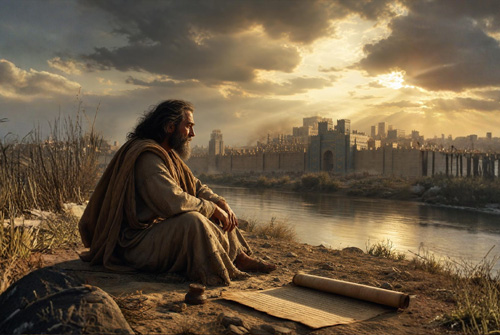
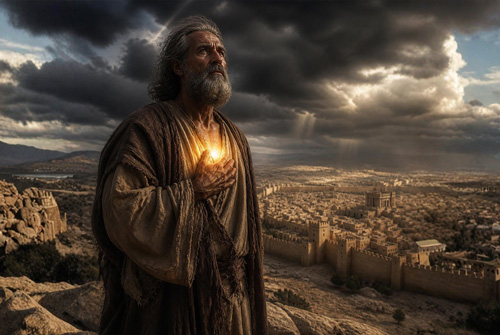
The prophet Micah was a contemporary of Isaiah and of Amos which places him in the mid-8th century B.C. Isaiah was active in Judah and, specifically, in the city of Jerusalem and Amos was found in the northern Kingdom of Israel. Micah was also from Judah but spent his time in the countryside as he seems to have felt that the sins of Israel and Judah were centered on their major cities of Samaria and Jerusalem and so avoided those cities. Much of Micah’s prophecy is directed against the corrupt rulers, judges, priests and prophets throughout Israel and Judah but our reading from chapter 5 is a prophecy of restoration for the re-united nations of Israel and Judah under a Messiah who will come from David’s line. Therefore, our reading is a Messianic Oracle, announcing a Messiah who will be born of David’s line in the city of Bethlehem. Our gospel passage continues the prophecy of the Messiah who is to come and, as we know, that prophecy was fulfilled many hundreds of years later in the person of Christ.
Notice how specific this oracle of Micah is:
- The one who is to rule Israel will come forth from the tiny city of Bethlehem.
- The origins of this ruler is “from of old, from ancient times” as the origins are the Davidic dynasty begun by King David who was born in Bethlehem.
- The Lord will give the people up to their sins until: “She who is to give birth has borne.” Compare this with Isaiah 7:14: “The virgin shall be with child, and bear a son, and shall name him Immanuel.” Of course, we understand these prophesies to refer to the Blessed Virgin Mary.
- “And the rest of his kindred shall return to the children of Israel:” Areference to the purified remnant of Israel to be re-united from north and south under the one Messiah.
Micah is telling the people, and us, that the promised Messiah will be born of David’s line in the city of Bethlehem and that the people will be held in their bondage to sin until that Messiah is born. Then, the purified remnant of Israel, those who recognize and believe in that Messiah, will be forgiven their sins and will be the people of God following the precepts and teaching of the Messiah. We, as Christians, are that purified remnant because we believe in and follow Christ.
Our second reading from the Letter to the Hebrews reminds the readers that when Christ entered the world he ushered in a new era which set aside the overly restrictive law governing sacrifices and offerings. Maintaining one’s relationship with God is no longer a matter of offering sacrifices in the temple but, rather, of doing God’s will. And what is God’s will? “You shall love the Lord, your God, with all your heart, with all your soul, and with all your mind. This is the greatest and first commandment. The second is like it: You shall love your neighbor as yourself. The whole law and the prophets depend on these two commandments” (Mt 22:37-40). And if we follow God’s will, “we have been consecrated through the offering of the body of Jesus Christ once for all.”
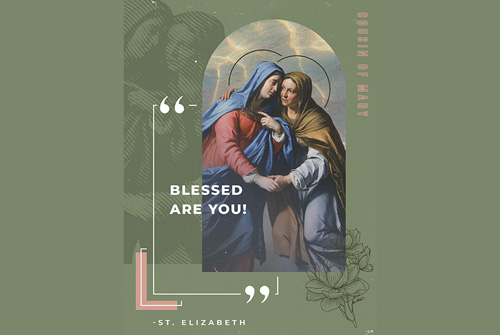
Our gospel passage is the second joyful mystery of the Rosary; the visitation and, as such, it not only carries on the theme of the coming of the Messiah (“how does this happen to me, that the mother of my Lord should come to me?) but, more importantly, the theme of the coming of the Kingdom of God in the person of the Messiah, in the person of the Holy Spirit, and in the person of the one who is to go before the Messiah to prepare his way. John was sent by God to prepare the way of the Lord; but that responsibility also falls to us. We are to prepare the way of the Lord by the way we live our lives as evidence of our belief that Jesus has given us the opportunity for eternal life in the happy presence of God in that state of existence we call heaven.
One could ask the question: How did Elizabeth know that Mary was to be the mother of the Lord? When Mary’s greeting reached Elizabeth’s ears, Elizabeth and her unborn son were immediately “filled with the Holy Spirit.” John is often spoken of in the gospels as filled with the Holy Spirit and that indwelling of the Spirit came upon him, and his mother, when they first encountered the unborn Messiah at the visitation. Jesus is one with the Holy Spirit. Carried in his mother’s womb, he filled the Blessed Mother with that same Spirit and then filled John and Elizabeth with the Spirit as well. And we continually repeat Elizabeth’s words: “Blessed are you among women, and blessed is the fruit of your womb.”
It is tempting to say that the golden thread this week is the proclamation of the coming of the Messiah. But it is more accurate to say that it is the proclamation of the coming of the Kingdom of God in the persons of the Messiah, the Holy Spirit, and the ones who prepares the way of the Messiah. Throughout 2000 years of history, that proclamation has spread far and wide through the ministry of the church aided always by the Holy Spirit. And, as we are the church, we must continue to spread that message by following Mt 22:37-40 above.