A Reflection for the Second Sunday of Advent, December 8, 2024
Reading 1: Bar 5:1-9
Responsorial Psalm: Ps 126:1-2, 2-3, 4-5, 6.
Reading 2: Phil 1:4-6, 8-11
Alleluia: Lk 3:4, 6
Gospel: Lk 3:1-6
Baruch is an enigmatic figure in the Old Testament because we really don’t know much about him or about the book that bears his name. What we do know is that Baruch was a scribe and close associate of the Prophet Jeremiah, often referred to as Jeremiah’s secretary, and was probably responsible for writing down many of Jeremiah’s prophesies.
The Book of Baruch is one of those “Deuterocanonical Books” not accepted in the Hebrew canon or in the Protestant tradition, probably because the oldest known version of this book was written in Greek and probably written long after the Babylonian Exile. Both of those conditions would exclude the book from the Hebrew canon.
One tradition concerning Baruch holds that, at the beginning of the conquest of Jerusalem by the Babylonians, some of the people of Jerusalem fled into Egypt to escape the Babylonians and forced Jeremiah and Baruch to go with them, where they were both eventually murdered by their countrymen. For approximately 10 years beginning around 598 B.C., the Babylonians were in control of Jerusalem but only exiled some of the inhabitants. Then, in 587, the city and the temple were destroyed and those remaining in the city were forced into exile in Babylon.
However, chapter 1 of the Book of Baruch describes Baruch as a captive in Babylon where he preached a message of penance and prayer for deliverance of the Israelites. If such is the case, this would have been between 598 and 587 because chapter 1 also tells us that Baruch wrote down his prayer and collected funds to be sent back to Jerusalem asking for the prayer to be read aloud to the people and sacrifices to be made in the temple on behalf of the Babylonian captives. If chapter 1 is correct, Baruch was in Babylon and the letter sent to Jerusalem before the city was leveled and the temple destroyed in 587 B.C. That leads to the questions concerning the author and the time of authorship of this book. Did Baruch meet his demise along with Jeremiah in Egypt, or did he find himself an exile in Babylon? Were parts of the book written by Baruch in Babylon, or was it written by a later author who put the words in Baruch’s mouth? That is why Baruch is such an enigma.
However, the overall message of Baruch is acknowledgement of the sins of the people and their kings that brought God’s wrath upon them in the form of the exile; a prayer for deliverance; and praise of the wisdom of God in the Law of Moses. That is followed in our reading from chapter 5 as consolation for Jerusalem and the people, assuring them that God will accept their penance and return them to their homeland. If we bring that message into the 21st century and apply it to ourselves the message is: acknowledgement of our sins; repentance of those sins; adherence to God’s commandments and the teaching handed on to us by the church and in the scriptures; and that consolation and the forgiveness of sin is assured by God through repentance and penance.
In the Old Testament, Jerusalem is often the focus of attention; seen as the holy city where God resides in the temple. But we should also see Jerusalem as a metaphor for heaven. “I also saw the holy city, a new Jerusalem, coming down out of heaven from God, prepared as a bride adorned for her husband” (Rev 21:2). So, when Baruch refers to the people being led out of Jerusalem on foot by their captives, but that God will bring them back aloft in glory (5:6), we should be reminded that humanity was cast out of the Garden of Eden (heaven) because of sin, but that God promises redemption for those who repent. Repentance levels the mountains and fills in the gorges so that penitents may advance secure toward heaven in the glory of God.
In our second reading, St. Paul prays for the Philippians (and for us) that, as we and the Philippians have accepted the gospel message as Christians “because of your partnership for the gospel,” we and the Philippians may increase in our love and devotion to Christ and “so that you may be pure and blameless for the day of Christ.”
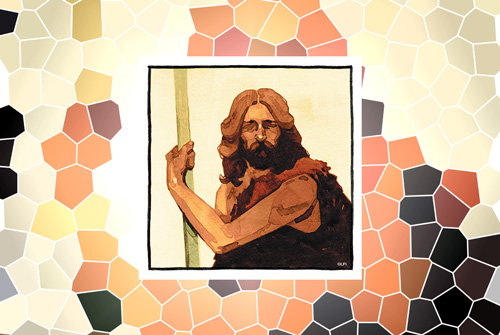
Our gospel passage gives us an historical reference to the time of the appearance of John the Baptist: “when Pontius Pilate was governor of Judea,” and draws our attention to John as “a voice of one crying out in the desert. Prepare the way of the Lord.” As the overall message of Baruch was acknowledgement of sins and repentance of those sins, John carries the message into the Christian era “proclaiming a baptism of repentance for the forgiveness of sins.” That is the message of Advent: repent and prepare in anticipation of the coming of Christ into the world. Repentance and preparation is the golden thread this week.
The Old Testament was written to, for, and about the ancient Jews; but our Christian faith comes from the Jewish faith. What applied to the ancients thousands of years ago applies to us today. Repent and prepare!
Reference credit: Graphic ©LPi