A Reflection on the Readings for the Twenty-ninth Sunday in Ordinary Time, October 20, 2024
Reading 1: Is 53:10-11
Responsorial Psalm: Ps 33:4-5, 18-19, 20, 22
Reading 2: Heb 4:14-16
Alleluia: Mk 10:45
Gospel: Mk 10:35-45
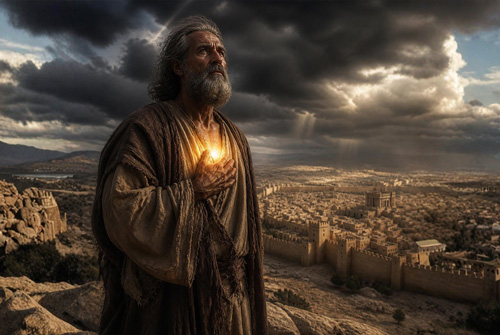
Our first reading this week is from chapter 53 of the Book of the Prophet Isaiah and is part of the fourth of the “Servant of the Lord” oracles of Isaiah. These four passages are, in my opinion, fascinating to read because they were written hundreds of years before the time of Christ and are very accurate descriptions of what Christ would do and would suffer on our behalf. Our reading is just a portion of that prophetic oracle, and I suggest you read it in its entirety (Is 52:13-53:12). And if you care to review the others, they are Is 42:1-9; 49:1-7; and 50:4-11.
Historically, many identifications have been proposed for this “Suffering Servant.” It was thought that the Servant could possibly be Israel itself, or a purified remnant of Israel after its chastisement; or possibly one of the Old Testament prophets, or Isaiah himself. But Christian tradition sees the fulfillment of these prophecies in Jesus Christ.
Notice how prophetic this reading is: The Servant will be “crushed in infirmity” and will “give his life as an offering for sin” and his descendants shall live “a long life.” Through his suffering, the Servant “shall justify many, and their guilt he shall bear.”
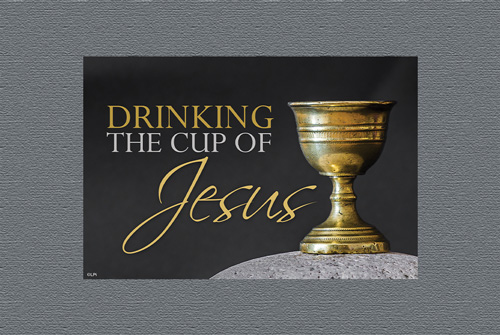
Carrying this prophesy forward into our gospel passage we see its fulfillment in the person of Christ. Jesus asked James and John if they could: “drink the cup that I drink or be baptized with the baptism with which I am baptized.” In the Old Testament, drinking the cup refers to the acceptance of God’s will; in this case, the Servant will be crushed in infirmity; the innocent on behalf of the guilty. Jesus’ baptism is his crucifixion and death that: “My servant shall justify many and their guilt he shall bear.” If James and John wished to share in Jesus’ glory, they must also share in his suffering on behalf of the gospel. They agreed to those terms but, at this point, they didn’t understand what they were saying. They envisioned Jesus as the Messiah who would re-establish the nation of Israel as a political power, and they were asking to be his “cabinet secretaries.” The other disciples became indignant at James and John for trying to place themselves at the head of the group. They, too, were thinking in terms of the contemporary world and wished to have places of honor for themselves. But, after the day of Pentecost when the Holy Spirit would descend upon them, they would all understand Jesus’ words and would freely accept their own baptism by shedding their blood for the gospel. They would understand that the contemporary world is passing away and holds nothing of eternity for us. But Jesus offers eternal life for those who put their trust and faith in him.
If we are to be among “the many,” we must also be willing to share in Christ’s suffering by patiently enduring the trials and tribulations of this life and by adhering to God’s freely given gift of faith. In the secular and cynical world, we live in, many see faith in Jesus’ words as marginal. Many are like James and John, interested only in self-fulfillment. They store up treasures on earth without concern for the treasures stored in heaven for those who have true faith. That faith is given to us as a gift from God that causes us to truly believe what we are taught by the scriptures and by the church. As our second reading from the Letter to the Hebrews points out, Jesus is someone we can truly relate to because he was totally human, just like us. He experienced all the temptations we experience, but he did not succumb to those temptations. And because he was totally sinless in his life on earth, he was able to offer that sinless life as a ransom for all of us. Without Jesus’ sacrifice, we would have no hope because nothing sinful can co-exist with God. Jesus offers us the opportunity to leave this life without the stain of sin so we can experience eternal happiness with him. And because he was well aware that we will always make mistakes while we live in this secular world, he established the church to offer us continual remission of our sins through the sacraments.
Jesus admonished the disciples for their secular thoughts. If they wished to be “great” (as Jesus is), they must be the servants of others (as Jesus is) because Jesus: “did not come to be served but to serve and to give his life as a ransom for many.” That admonishment is for us as well. We must rise above the secular and cynical world we live in and place our faith and trust in God and in his promises of a better world.
The “golden thread” this week is the gift of faith. Faith in the scriptures that prophesied hundreds of years in advance that Christ would come into the world for the forgiveness of sins; and faith that what was prophesied was fulfilled. Faith that Jesus established the church so that his sacrifice could be continued in our secular world, and to constantly remind us through the church that the best is yet to come.
Reference: graphic ©LPi